Blog
Certificate Showdown: IGI vs GIA in a UK Marketplace

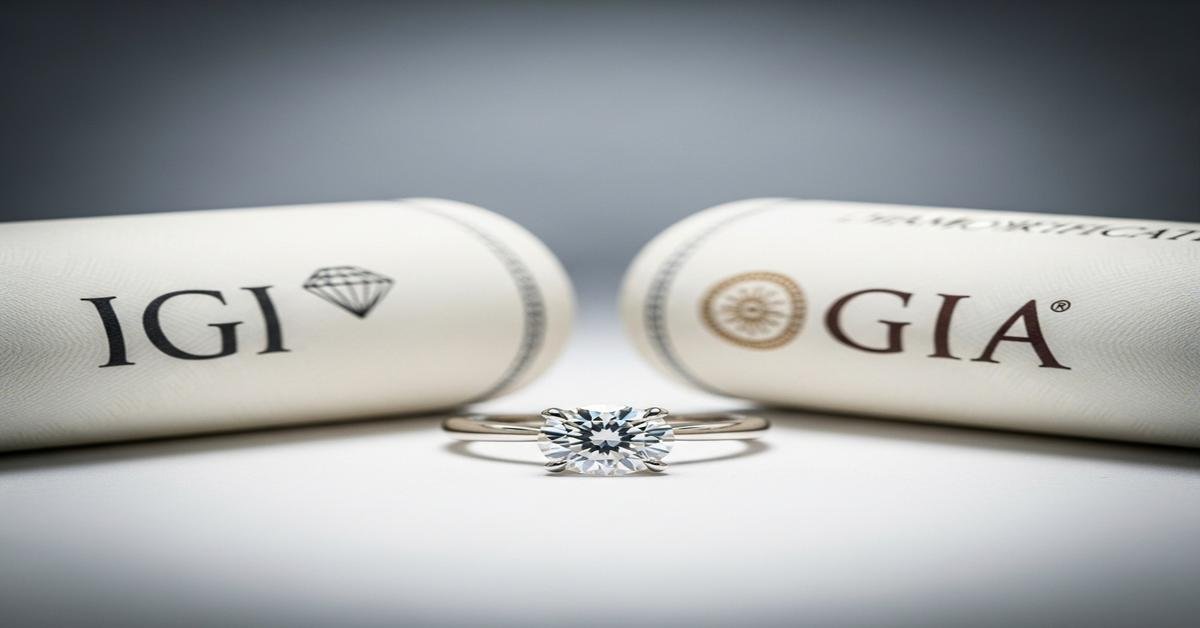
Choosing between an IGI and a GIA certificate matters in the UK because the certificate affects price, resale value, and your confidence that what’s written matches the stone. This article compares the two labs in plain terms. I explain the practical differences, give concrete examples (including carat and mm where it helps), and end with a short buying checklist you can use in-store or online.
What GIA and IGI are — short and practical
GIA (Gemological Institute of America) is widely regarded as the global reference lab for natural diamonds. It is non-profit and focuses on consistent, conservative grading. GIA reports are the standard used by auction houses and many high-end jewellers. For a 1.00 ct round brilliant (about 6.4–6.5 mm diameter), a GIA report will give you colour, clarity, polish, symmetry, fluorescence and an independent cut grade for rounds.
IGI (International Gemological Institute) is a larger commercial network of labs that grades both natural and lab-grown stones and also certifies finished jewellery. IGI is commonly used by retail chains and by sellers of lab-grown diamonds. IGI reports include similar data points, and IGI often provides cut grades on a wider range of shapes (princess, cushion) than some other labs.
Key differences that affect buyers in the UK
- Grading strictness and consistency. GIA’s grading is more conservative and consistent across labs. That means a GIA VS2 clarity or G colour is less likely to be later downgraded. IGI’s grading can be slightly looser in some parameters. Why it matters: looser grading can make the same stone look better on paper and sell for more, but it may fetch less at resale.
- Market perception and resale. In the UK secondary market, GIA certificates generally command higher resale prices and better buyer trust. For high-value items (0.75 ct+ natural diamonds), a GIA certificate often reduces friction at auction or when selling to a dealer.
- Lab-grown diamonds. IGI is very common for lab-grown stones and for ready-to-wear pieces. Both labs now grade lab-grown diamonds, but IGI’s footprint in the lab-grown market is larger. If you’re buying a lab-grown 0.50 ct princess cut, you’ll frequently see an IGI report.
- Cut grading differences. GIA provides a cut grade only for round brilliants; its methodology is well documented and strongly influences light performance expectations. IGI offers cut-related evaluations on more shapes, but their terminology and thresholds differ. For rounds, a GIA “Excellent” cut has predictable light performance; the same “Excellent” label from another lab may not map exactly.
- Report detail and plotting. Both show inclusion plots and measurements. GIA’s plotting and descriptions focus on objectivity. IGI sometimes includes more photos of mounted stones and finished jewellery, which is useful if you’re buying a set piece.
- Verification and laser inscription. Both labs offer report verification online and can laser-inscribe the girdle with the report number. Always ask for the inscription match. Why: a mismatched or missing inscription can indicate the report doesn’t belong to that specific stone.
Concrete examples — what buyers actually see
Example 1: Natural 1.00 ct round brilliant, G colour, VS2 clarity, GIA Excellent cut. Diameter ~6.45 mm. On the UK market this will be priced and marketed as a strong, resalable investment-grade stone. A buyer can reasonably expect tighter price spread when selling to a dealer or trading in later.
Example 2: Same visual stone but IGI-certified and labelled “Excellent” cut. The stone might be priced lower at retail, or sometimes the same if the seller wants to appear competitive. At resale, the buyer often finds a wider discount because buyers check for GIA when paying premium prices. Why: market confidence — not necessarily the stone itself.
Example 3: 0.50 ct lab-grown princess, IGI certificate. Lab-grown stones at 0.30–1.00 ct commonly carry IGI reports. These are ideal if you want a lower-cost, visually similar alternative to natural diamonds. But expect faster value depreciation compared with natural diamonds; resale demand in the UK is more limited.
How UK retailers and platforms use certificates
- High-street chains and online retailers. Many use IGI for large inventories because IGI’s network can handle volume and finished jewellery. This keeps retail prices competitive.
- Independent jewellers and luxury houses. They often prefer GIA for loose natural diamonds or offer GIA as an upgrade for high-value purchases. Why: it supports trust and future resale value.
- Auction houses and resale dealers. They give priority to GIA when valuing lots and estimating resale prices. IGI lots sell, but buyers adjust price expectations.
- Hallmarking and metals. Certificates relate to stones, not metals. UK hallmarking covers the setting: 18ct (75% Au), 9ct (37.5% Au), platinum 950 (95% Pt). Ask for both the diamond certificate and the setting’s hallmark for full transparency.
Practical checklist for UK buyers
- Ask which lab issued the report and why. For natural diamonds >0.75 ct, prefer GIA if resale matters.
- Match the report number to a laser inscription on the girdle. If absent, request independent verification.
- Compare specifics, not labels. Look at actual measurements (mm), table and depth %, polish/symmetry, clarity plot, and fluorescence.
- If buying lab-grown, expect an IGI certificate commonly; budget for faster depreciation and limited resale.
- Get an independent valuation for insurance. A certificate describes the stone; a written valuation sets replacement cost in the UK market.
- Consider the whole package: setting metal (18ct white gold = 75% gold), workmanship, warranty and return policy.
Bottom line — which to choose?
Choose GIA when you want the strongest, most widely recognised independent grading for natural diamonds, especially above 0.50–0.75 ct. Choose IGI when you’re buying lab-grown diamonds, finished jewellery from a retailer who uses IGI, or when budget and availability are priorities. Always verify the report to the stone, compare hard data (carat, mm, table/depth, clarity plot), and get an independent valuation for insurance or future resale.
Certificates are a tool. Use them to check facts and build trust. The right lab depends on the stone, your budget, and whether resale value is important to you in the UK market.