Blog
Tension Settings: Engineering Marvel or Daily-Wear Drama?

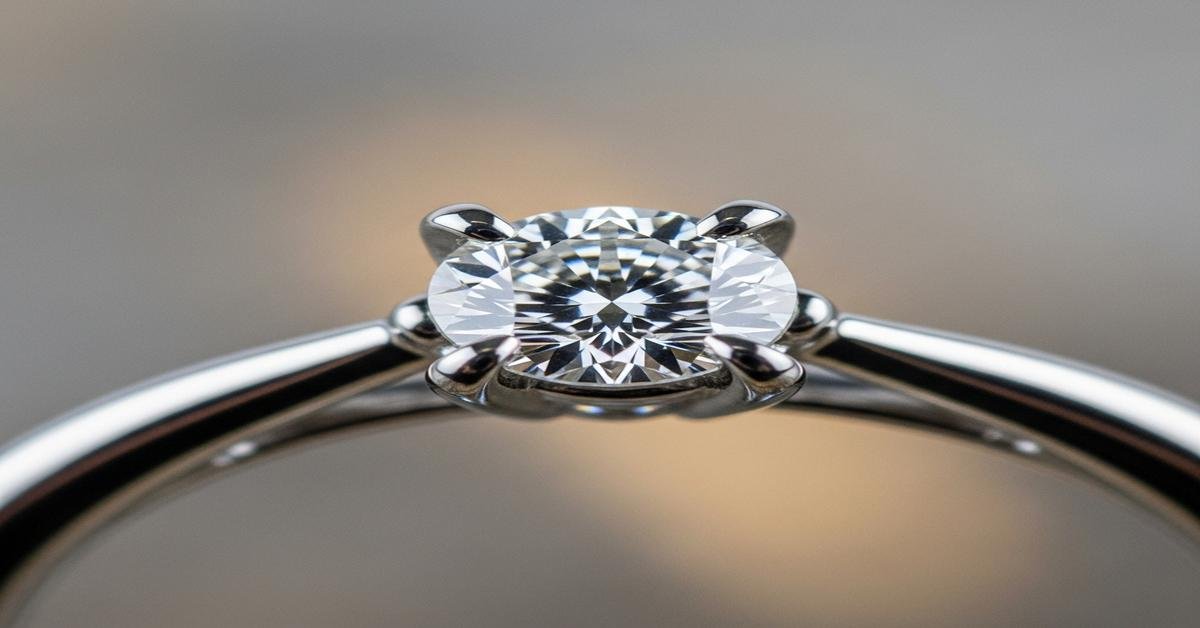
Tension settings are eye-catching. The stone appears to float between two halves of metal. The look is modern and minimal. But the design raises real engineering and wear questions. This article explains how tension settings hold stones, which stones and metals work best, what can go wrong, and how to care for one so it stays secure for years.
How a tension setting works
A tension setting grips the gemstone by compressing metal across the stone’s girdle. Think of two sturdy jaws pushing inward. The ring’s shoulders act like springs. They store elastic force and press against the stone. The holding force is mostly friction and a tiny bit of surface compression on the girdle.
Why that matters: the design does not surround the stone the way a bezel or prong does. The entire load concentrates at the two contact zones. If those zones fail—by the metal deforming or the stone chipping—the gem can come loose.
Which stones are safe in tension settings
- Diamond — Best choice. Hardest (10 on Mohs) and highly resistant to edge chipping when cut with a robust girdle. Ideal for round brilliants and well-proportioned ovals.
- Moissanite — Very hard (~9.25). Works well, but inspect for inclusions near the girdle. Can chip if struck on the edge.
- Sapphire and ruby — Hard (9) and possible in tension settings if cut with a strong girdle. Avoid thin or markedly tapered girdles.
- Not recommended: emerald (brittle, many inclusions), topaz (8), quartz-family stones, and most soft or cleaving stones. These can chip under point pressure.
Practical numbers: a 1.0 ct round diamond is about 6.5 mm across. The jeweler must ensure the contact zone contacts a sturdy section of the girdle at roughly 90 degrees to minimize lever action. Stones under 0.25 ct are usually too small for reliable tension gripping unless the ring is overbuilt.
Metal choice and ring geometry
Not all metals perform the same. The metal must return elastic force and resist permanent deformation.
- Platinum 950 — Most reliable. Platinum is dense and resists flow. It tolerates repeated stresses better. Recommended for daily-wear tension rings.
- 14k gold (white, yellow, rose) — Stronger than 18k because it contains more alloyed metals. 14k is commonly used for tension work when platinum is not desired.
- 18k gold — Softer. More likely to deform over time. Use caution and expect more frequent checks.
- Silver — Generally unsuitable; too soft and prone to deformation.
Geometry matters as much as alloy. A typical tension ring will have a cross-section 2.5–3.5 mm thick at the shoulders for a 1.0 ct stone. Larger stones need thicker shoulders. Narrow bands and thin walls reduce clamping force and increase risk.
Manufacturing and testing
Good tension rings are not off-the-shelf prongs. Many reputable makers use CNC machining to produce exact seats or mill pockets that match the stone’s girdle. Laser welding and hand-finishing follow. Some use a two-step process: machine the seat, insert a mock stone, and perform mechanical pull tests.
Ask if the jeweler performs a pull test and whether the ring is made to fit the actual stone. A factory tension ring soldered or bent to size without a custom-seat is more likely to fail.
Risks and failure modes — know the why
- Metal flow — Repeated stress or a heavy knock can cause the metal to deform (creep). Softer alloys show this sooner. Deformation reduces clamping force.
- Stone chipping — Pressure concentrates at the girdle. If the girdle has a feather, inclusion, or is thin, a hard impact can cause a fracture that grows and lets the stone slip out.
- Improper seat — If the contact area is too small or polished poorly, actual pressure is uneven and the stone can pivot or work loose.
Everyday wear and care
With the right materials and craft, a tension ring can be worn daily. But it needs care:
- Inspect every 3–6 months. Look for changes at the contact points, visible gaps, or a stone that shifts under a toothpick test.
- Avoid hard impacts. Do not wear the ring for sports, heavy lifting, or DIY work where it can strike a hard surface.
- Avoid ultrasonic cleaners unless the manufacturer approves. Ultrasonic cleaning can dislodge a poorly seated stone or worsen micro-fractures.
- Keep away from extreme heat. High heat can anneal gold or platinum slightly and reduce clamping force, and it can affect certain gemstones.
- Plan for resizing carefully. Resizing a tension ring usually requires reengineering the tension and refitting the stone. Expect to leave the ring with the jeweler for proper testing.
Questions to ask before you buy
- What metal alloy is used (e.g., Platinum 950, 14k white gold)? Why did you choose it?
- Was the seat made for this exact stone? Can you show the test report or video of a pull test?
- How often should I bring the ring in for inspection? Is that service included or charged?
- What warranty or workmanship guarantee covers loss or damage? What does insurance need to cover?
- If the stone chips or loosens, what is the repair process and typical cost?
Alternatives and compromises
If you like the floating look but want more security, consider hybrid options:
- Partial bezel — A bezel on the bottom half with tension-like shoulders on top. Offers edge protection and reduces chip risk.
- V-prongs — For pear and marquise shapes; they protect points while reducing visible metal.
- Low-profile bezel — Keeps more metal around the girdle while preserving a modern silhouette.
Bottom line: a tension setting is an engineering solution that trades metal coverage for visual drama. When made in a strong alloy (preferably platinum or 14k gold), machined to the exact stone, and inspected regularly, it can be secure for daily wear. But it requires stricter manufacturing standards and more careful maintenance than prong or bezel settings. Ask specific questions, insist on a test fit, and expect periodic professional checks.