Blog
Double Claws: Hype or Real Security for Ovals?

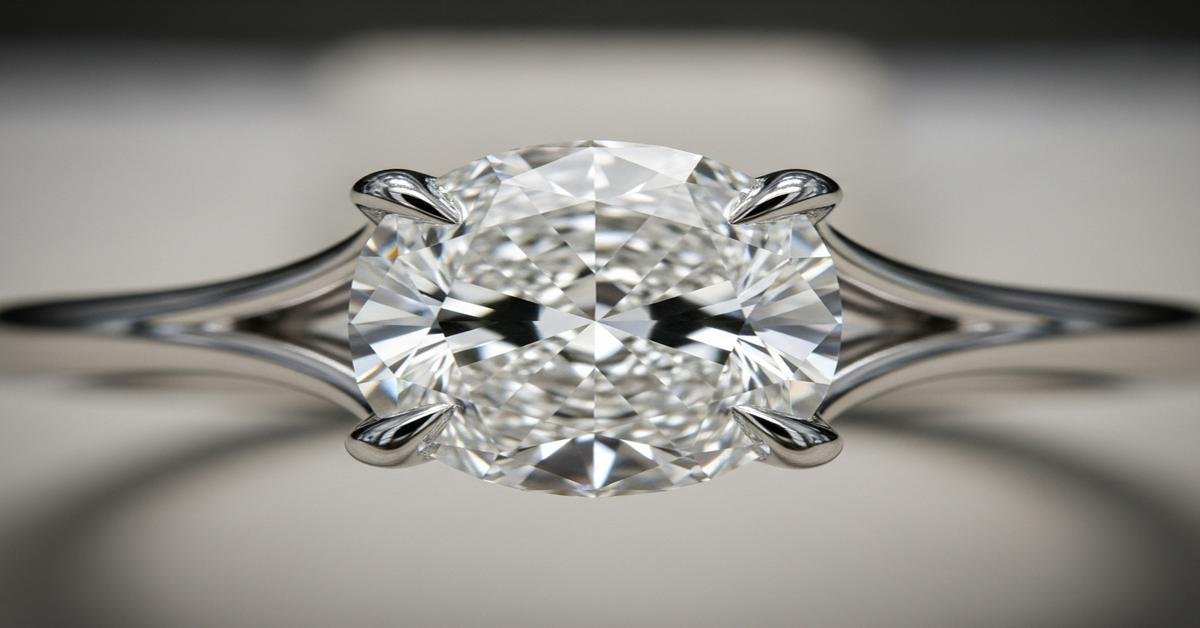
Double claws — also called split or paired prongs — are a common design choice for oval engagement rings. They look delicate and can make the stone appear larger. But do they actually make an oval more secure, or are they mostly decorative? This article explains how double claws work, when they add real protection, and when a single, thicker prong, more prongs, or a bezel is the smarter choice.
What are double claws?
Double claws are two small prongs placed very close together at a single setting point instead of one wider prong. Each “claw” grips the stone in roughly the same place. Jewelers use them to create a finer visual line around the stone while keeping similar surface contact. They are different from a traditional four‑ or six‑prong layout because the paired prongs occupy one position but split the metal into two tines.
How double claws can improve security
- Redundancy at a single point. If one tine chips or bends, the adjacent tine can still hold part of the load. That reduces sudden loss risk compared with a single thin prong that fails completely.
- Less visible metal, similar hold. Split prongs let you reduce apparent metal mass without reducing the contact area. That can keep light return high while keeping the stone seated.
- Better resistance to rotation for ovals. Ovals tend to twist on the finger because of their elongated shape. Paired prongs at the long ends, plus prongs along the sides, make rotation less likely because they create extra contact surfaces near the stone’s longest axis.
When double claws don’t add meaningful security
Double claws are not a universal solution. They can be mostly style if details aren’t correct.
- Too thin tines. Many double claws look dainty but are only 0.5–0.7 mm thick per tine. At that thickness they bend and wear quickly. A single 1.0–1.2 mm prong is often stronger than two tiny 0.5 mm tines.
- Poor root thickness. Strength comes from the prong root — the thickness where the prong joins the gallery. If the root is thin, both tines share the same weak point and can fail together.
- Gaps and dirt traps. Closely spaced tines can trap dirt and make inspection difficult. That hides wear and allows moisture to accelerate metal fatigue.
- Not suitable for very large or heavy stones. For ovals over about 2.0 ct (roughly 9–11 mm long and 6–7 mm wide), expect heavier prongs or six prongs. Double claws on very large stones can be inadequate unless each tine is beefy and well‑engineered.
Specific numbers and examples
- Typical 1.0 ct oval: about 7–9 mm long × 5–6 mm wide. A secure setup often uses four main prong positions: two at the long ends and two on the sides. If using double claws, make each tine at least 0.8–1.0 mm wide with a root that measures 1.2 mm or more.
- For 1.5–2.0 ct ovals (~9–11 mm long): favor thicker single prongs or six-prong layouts. Prong roots should be 1.3–1.6 mm, and tine widths around 1.0–1.2 mm.
- If the girdle is thin or fragile, consider a bezel or partial bezel for the long axis ends. Bezel settings protect the girdle better than prongs.
Metal choice and wear resistance
Metal matters. It changes how quickly prongs wear and how well they hold shape.
- Platinum (950 Pt) is denser and more wear‑resistant. It deforms rather than loses metal quickly. That makes platinum a strong choice for thin prongs and double claws because the tines hold their profile longer.
- 14k gold (about 58.5% gold) is harder than 18k and resists wear better. For everyday wear, 14k white or yellow gold is a practical middle ground.
- 18k gold (75% gold) is softer. If you want double claws in 18k, insist on larger tine dimensions or choose platinum for the long term.
How to evaluate a double‑claw setting in person
- Ask the jeweler to show the prong root under a loupe. Look for a solid base where the prongs meet the gallery. Thin roots are a red flag.
- Check tine thickness with a ruler or ask for dimensions. Anything under 0.7 mm per tine is worth questioning for daily wear.
- Look at how the prongs meet the girdle. The prong should bite slightly over the girdle — about 0.2–0.5 mm — so the stone can’t slip out.
- Ask how the prongs are finished. Proper burnishing and polishing reduce micro‑fractures that lead to breakage.
Maintenance and practical advice
- Have prongs checked every 6–12 months. Double claws hide wear more easily, so frequent inspections are smart.
- If a tine bends, don’t try to push it back at home. A jeweler will re‑tip or rebuild the prong and solder the root for strength.
- For active lifestyles or jobs that use hands a lot, choose thicker prongs, more prongs, or a bezel instead of relying on the look of split claws.
Bottom line
Double claws are not just hype, but they are not a universal safety upgrade either. When designed with sufficient tine width, solid roots, and a hard metal like platinum or 14k/18k with adequate dimensions, they add useful redundancy and keep a refined look. When made too thin, or used on large ovals without proper engineering, they become decorative and risky.
Ask for measurements, inspect the prong roots, and match the setting to the stone size and wear habits. For everyday security on a 1 ct oval, well‑made double claws can be a good choice. For heavier stones or very active wearers, prefer thicker single prongs, six prongs, or a bezel.