Blog
Bezel vs Prongs: What Actually Protects in Daily UK Life

Choosing between a bezel and prongs isn’t about “style,” it’s about how your ring survives doors, trolleys, knitwear, prams, Tube handrails, gym bars, and British weather. Protection means resisting knocks, avoiding snags, keeping the stone seated, and staying serviceable over years. Here’s what actually matters in daily UK life.
What “protection” really means
- Impact resistance: Does the setting spread shock away from the stone’s edges (where chips happen)?
- Snag resistance: Will it catch on pockets, scarves, gloves, or hair and bend open?
- Stone security: How many points restrain the stone if something bends or wears?
- Dirt and moisture: Does grime sit under the stone and loosen it over time?
- Serviceability: Can a UK jeweller maintain it easily and affordably?
Bezel settings: how they protect
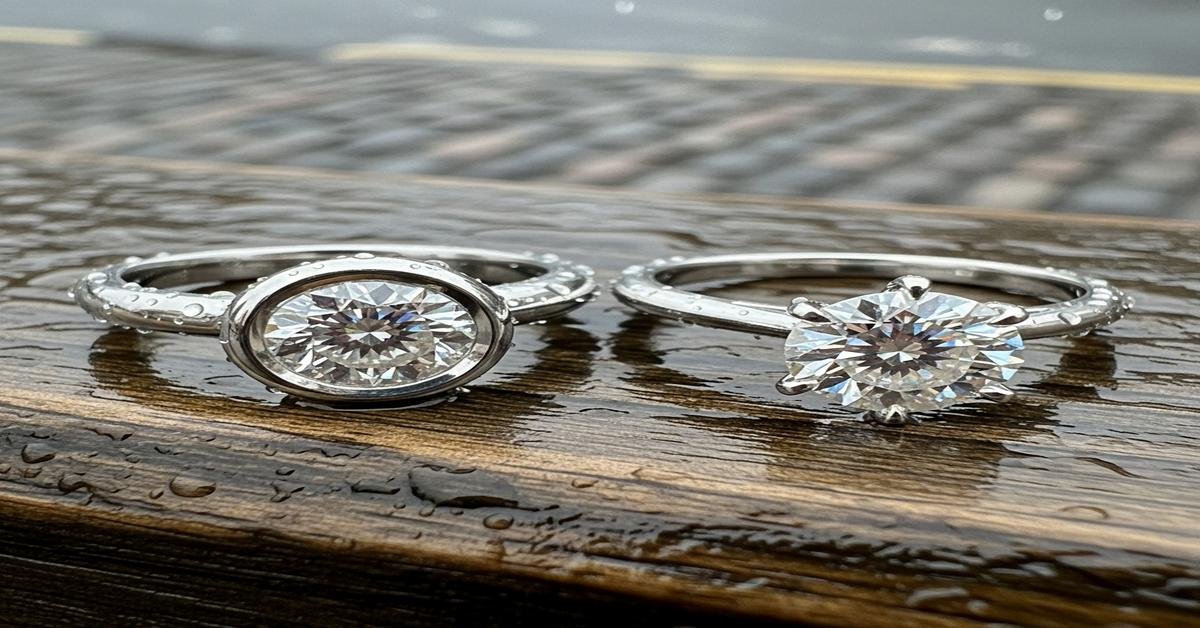
A bezel is a metal collar that wraps the girdle of the stone. A proper bezel has a lip that is burnished over the edge by ~0.2–0.5 mm. For a 6.5 mm round (about 1 ct diamond), a good everyday bezel typically uses a wall thickness of 0.5–0.8 mm and rises 0.3–0.5 mm above the girdle.
- Why it protects: A bezel spreads impact across the entire circumference, not just points. It shields corners on fancy cuts and prevents direct hits to the edge.
- Snagging: Very low snag risk. The smooth rim slides under knit cuffs and gloves.
- Light return: A thin, well-polished bezel minimally affects brightness on diamonds and sapphires. Thick, high bezels can mute edge scintillation.
- Cleaning: Dirt can pack under a fully closed bezel. Ask for a small “drain/cleaning” hole under the seat so warm soapy water can flush it.
- Service: It rarely “loosens,” but if distorted, the lip must be re-burnished. Resizing and straightening are more involved than prongs.
Prongs: how they protect
Prongs (claws) are posts that grip the stone at specific points. For a 6.5 mm round, typical everyday security is 6 prongs with tip diameters around 0.8–1.0 mm. For a princess, use reinforced V-prongs at the corners.
- Why they protect: They restrain the stone while exposing more of it to light. The downside is point loading: a hard knock can bend or shear a single claw.
- Snagging: Higher snag risk, especially with tall “cathedral” heads or thin, sharp tips.
- Visibility: Maximum light and “air” around the stone; more fire and edge sparkle.
- Service: Prongs wear, flatten, and can hook fibres. Routine re-tipping keeps them safe.
Daily UK life: what actually happens
- Commute (Tube, buses, doors, turnstiles): Frequent side knocks. A low bezel spreads impact; prongs can catch on straps and rails. Verdict: bezel wins for contact-heavy travel.
- Winter layers and knitwear: Prongs and pavé snag scarves and cuffs. Bezel glides. Verdict: bezel.
- Gym and weekend sports: Best practice is to remove rings. If you don’t, prongs can deform under barbell pressure; bezels deform less and protect edges. Verdict: bezel, but removal is safer.
- Childcare and pets: Prongs scratch delicate skin and snag clothing. Bezel is smoother and safer. Verdict: bezel.
- Office life: Typing is fine. Prongs can catch on pocket seams; bezel is worry-free. Verdict: bezel for low maintenance; prongs if you want max sparkle and are careful.
- Gardening/DIY: Soil packs under bezels and around prongs; knocks are severe. Verdict: remove the ring, regardless of setting.
Stones: who needs what
- Diamond (10, perfect cleavage): Hard but chips at the girdle and corners. 6 prongs protect rounds well; bezels add edge insurance. For ovals/pears/marquises/princess, a bezel or stout V-prongs protect points.
- Sapphire/Ruby (9, no cleavage): Durable; both settings work. Bezel makes a superb daily ring in the rain, Tube, and gym.
- Emerald (7.5–8, brittle, fissures): Needs protection. Bezel is safer than prongs, especially for corners. Avoid ultrasonics and harsh cleaning either way.
- Opal, Moonstone, Morganite, Tanzanite (soft or brittle): Bezel gives a fighting chance in daily wear, but you must still be gentle. Consider pendants or earrings if you’re tough on rings.
- Lab diamond and moissanite: Same logic as diamond for protection.
Metal and alloys: this affects protection
- Platinum 950 (often Pt950/Ir or Pt950/Ru): Tough, malleable; it deforms rather than losing mass. Great for bezels and prongs; prongs tend to bend before breaking.
- 18ct gold (750): Balanced hardness and toughness. Good for prongs and bezels. White gold is usually rhodium plated for colour; plating does not affect security.
- 14ct gold (585): A practical middle ground for durability; less common in the UK but excellent for prongs.
- 9ct gold (375): Harder but more brittle due to copper/zinc content. Thin 9ct prongs can snap rather than bend; use thicker gauges if choosing 9ct.
Takeaway: For maximum security, platinum prongs or a platinum bezel. In gold, keep prongs stout and bezels not paper-thin.
Maintenance and UK cost reality
- Check-ups: Every 6–12 months. Ask for prong tightness, bezel lip integrity, and stone movement check.
- Re-tipping prongs: Typically £25–£60 per prong in the UK, depending on metal and workshop. Expect re-tips every 3–7 years with daily wear.
- Bezel refurbishment: £80–£180 to re-burnish/re-finish a distorted lip or re-seat a stone.
- Rhodium plating (white gold): £35–£80, typically 6–18 months between platings depending on wear.
- Resizing: Prong solitaires are usually simpler. Full bezels can cost more to resize since the bezel roundness and seat must remain true.
- Cleaning: Warm water, mild detergent, soft brush. Ultrasonic is fine for diamonds/sapphires/rubies, not for emeralds/opal. Ask your jeweller for a drain hole under bezels.
Practical recommendations
- If you’re rough on rings, commute hard, or wear gloves often: Choose a low, continuous bezel or half-bezel. Aim for a 0.5–0.8 mm lip thickness and 0.3–0.5 mm coverage above the girdle.
- If you want maximum sparkle and can maintain it: 6-prong head (rounds) or V-prongs (corners). Keep prongs robust: 0.8–1.0 mm tips for a 6.5 mm stone, not pencil-thin micro-claws.
- For fancy shapes with points (pear, marquise, princess): Bezel or strong V-prongs at tips. These are the first places to chip.
- Metal: Platinum 950 for prongs you don’t want wearing down; 18ct gold for a balance of hardness and workability. Avoid ultra-thin 9ct prongs.
- Profile: Keep the stone low. Lower settings reduce leverage from knocks and fit under gloves.
- Hybrid ideas: Partial bezels (east–west bars), bezel halos, or low 6-prong baskets give protection without a “full metal rim” look.
Numbers to ask your jeweller
- Bezel lip: 0.5–0.8 mm thickness; 0.3–0.5 mm coverage above the girdle for daily wear.
- Prongs: 6 for a round 1 ct; tip diameter 0.8–1.0 mm; proper seats cut to ~40–60% of prong thickness for strength.
- Corners: V-prongs at 1.0–1.2 mm on princess/pear/marquise corners.
- Metal: Pt950 or 18ct. If 9ct, ask for sturdier prongs and a not-too-thin bezel wall.
- Height: Keep the stone low; avoid tall cathedral heads if you’re active or wear layers.
- Cleaning access: Request an under-gallery opening or drain hole for bezel-set stones.
Bottom line for UK daily wear
If “protection” is your priority, a low, well-built bezel in platinum or 18ct wins in real British life—fewer snags, better edge shielding, and less day-to-day fuss. If you love an open look and sparkle, go prongs, but make them sturdy (six for rounds, V-prongs for corners) and budget for periodic re-tipping. The right measurements, metal, and profile matter more than the marketing name of the setting.