Blog
Spinel’s Secret: Why It Faces Up Larger Than Sapphire

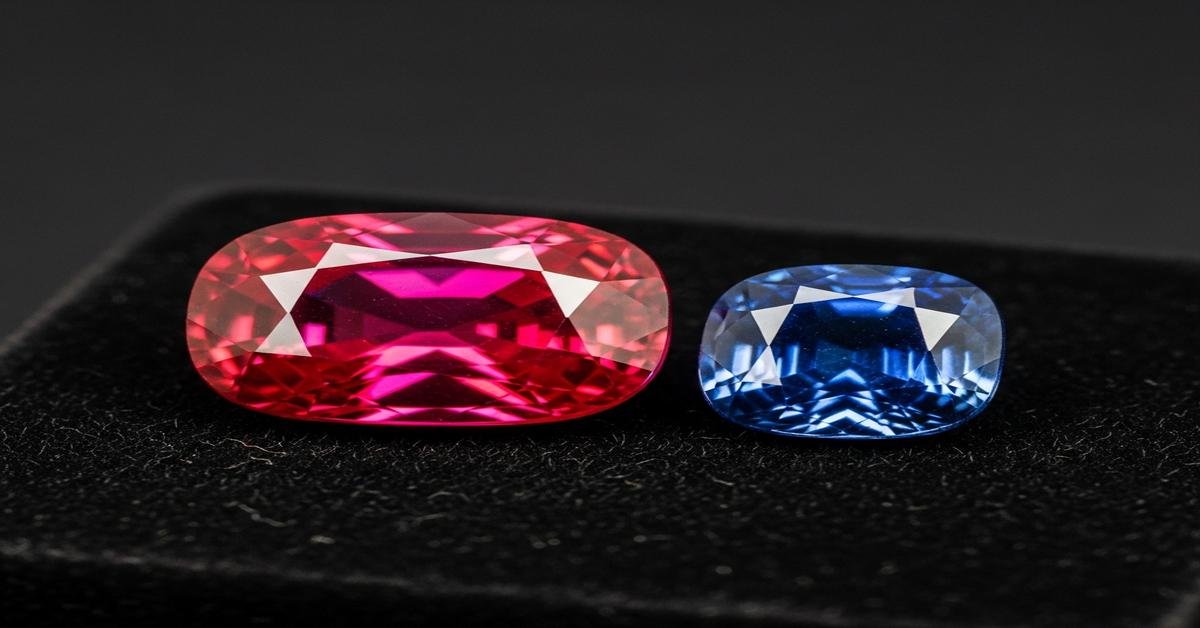
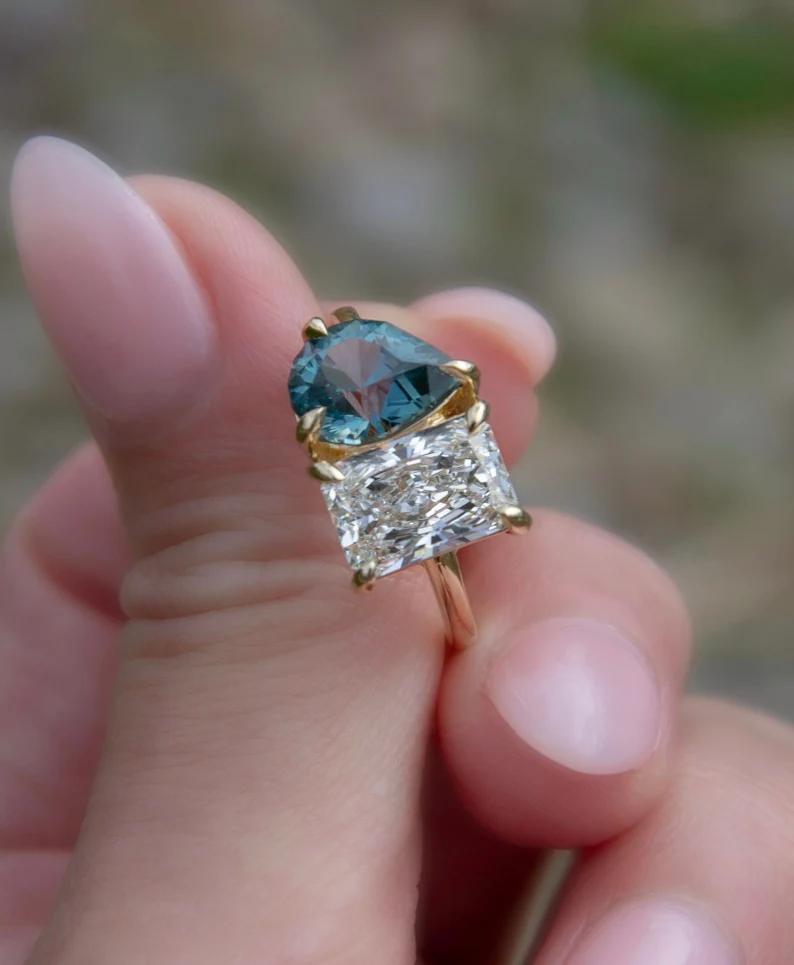
Spinel often looks bigger than sapphire when you compare stones by carat weight. That surprises buyers because a carat measures weight, not size. The difference comes from real, measurable properties: density (specific gravity), optical behavior (refractive index and pleochroism), and how cutters shape each material. Below I explain the mechanics with numbers and examples so you can judge size and value with confidence.
Density (specific gravity): the core reason
Carat is weight. Size (mm) comes from volume. For the same weight, a lower-density gem occupies more volume. Spinel has a lower specific gravity than corundum (sapphire).
- Spinel SG: ~3.58–3.61
- Corundum (sapphire) SG: ~3.98–4.06
Take a simple example. Use SG 3.60 for spinel and 4.00 for sapphire. For the same carat weight the volume ratio is 4.00 / 3.60 ≈ 1.111. That means spinel has ≈11% more volume. Linear dimensions scale with the cube root of that ratio: cube root(1.111) ≈ 1.036. So a spinel will be about 3.6% larger in diameter or length than a sapphire of the same weight.
Practical example: an 8.0 × 6.0 mm sapphire and a same-weight spinel would end up roughly 8.3 × 6.2 mm after accounting volume. That 0.2–0.3 mm looks small on paper but is noticeable in a setting and to the eye, especially for rectangular or oval cuts.
Optical differences: refractive index and appearance
Refractive index (RI) affects how light travels and returns from a gem. It influences perceived brightness, contrast, and how “dense” the face-up image looks.
- Spinel RI: roughly 1.712–1.736 (isotropic)
- Corundum RI: roughly 1.760–1.778 (anisotropic)
A higher RI (corundum) bends light more and produces stronger internal reflections and contrast. That can intensify color and sparkle but also creates darker facet zones and deeper-looking tables. A lower RI (spinel) tends to give a more open, transparent face-up look. The openness makes the table area appear more expansive and the stone look larger, particularly in lighter or more pastel colors.
Put simply: spinel’s lower RI and greater transparency let you see more of the stone’s interior and pavilion, so it reads visually larger, even when the diameter difference is small.
Crystal properties and how cutters respond
Cutters tailor proportions to each material’s optical and physical traits. Two key factors affect how a gem is cut:
- Pleochroism: Corundum is pleochroic — it shows different colors when viewed from different directions. Cutters must orient rough to favor the strongest, most attractive color. This often forces deeper pavilion depths or compromises in diameter so color remains saturated. Spinel is isotropic with no pleochroism, so cutters can orient and shape rough to maximize face-up spread without worrying about losing color.
- Rough shape and inclusions: Spinel crystals commonly form octahedra with relatively clean interiors. This yields clean, even cutting blanks that favor larger tables and shallower overall depth. Sapphires frequently have zoning or rutile inclusions that require deeper cuts to optimize color and hide inclusions.
Examples of cutter choices:
- A spinel may be cut with a larger table and slightly shallower pavilion to maximize mm spread and brilliance for a lighter-colored stone.
- A sapphire of the same weight may be cut deeper (smaller table, greater pavilion) to enrich a blue or pink saturation, sacrificing face-up spread for color intensity.
Perception: why bigger can mean less sparkly
A spinel that faces up larger might show less intense sparkle than a sapphire of the same carat because of the RI difference. Higher RI gems like corundum return more internal reflections, which create bright, contrasted flashes. Those flashes read as “fire” and brilliance and can sometimes make a gem feel more lively even when it measures slightly smaller. But sparkle is different from face-up area; both matter and the buyer must decide which they prefer.
Measuring size: practical tips for buyers
When choosing between spinel and sapphire, don’t rely on carat alone. Use mm measurements and look at photos or the stone in person.
- Compare mm dimensions: Ask for exact length × width × depth in mm. A 3–4% diameter difference is common and visible in hand.
- Ask about proportions: Table size (%) and depth (%) tell you how the cutter prioritized spread vs. color. A larger table and shallower depth usually increases face-up size.
- Consider color goals: If you want saturated, deep blue or padparadscha-like tone, sapphire’s deeper cuts may be preferable. If you want the largest-looking stone for a given carat and a clean, vibrant stone, spinel often wins.
- Settings matter: A bezel will make any stone look slightly smaller; a thin prong setting shows more of the face-up area.
Quick summary: why spinel faces up larger
- Lower specific gravity: same carat = more volume → larger dimensions (≈3–4% larger linearly in common SG comparisons).
- Lower refractive index and isotropic nature: more open, transparent face-up look; no pleochroism forces orientation constraints.
- Cutting strategy: cutters can maximize spread in spinel without sacrificing color; sapphires are often cut deeper to boost saturation.
In short, spinel can and often does face up larger than sapphire at the same carat weight because of real physical and optical differences — mainly density and how cutters treat the rough. If you want the biggest-looking gem for a given carat, compare mm dimensions and proportions, not carat alone.