Blog
Two-Tone Rings: Stylish or a Future Repair Nightmare?

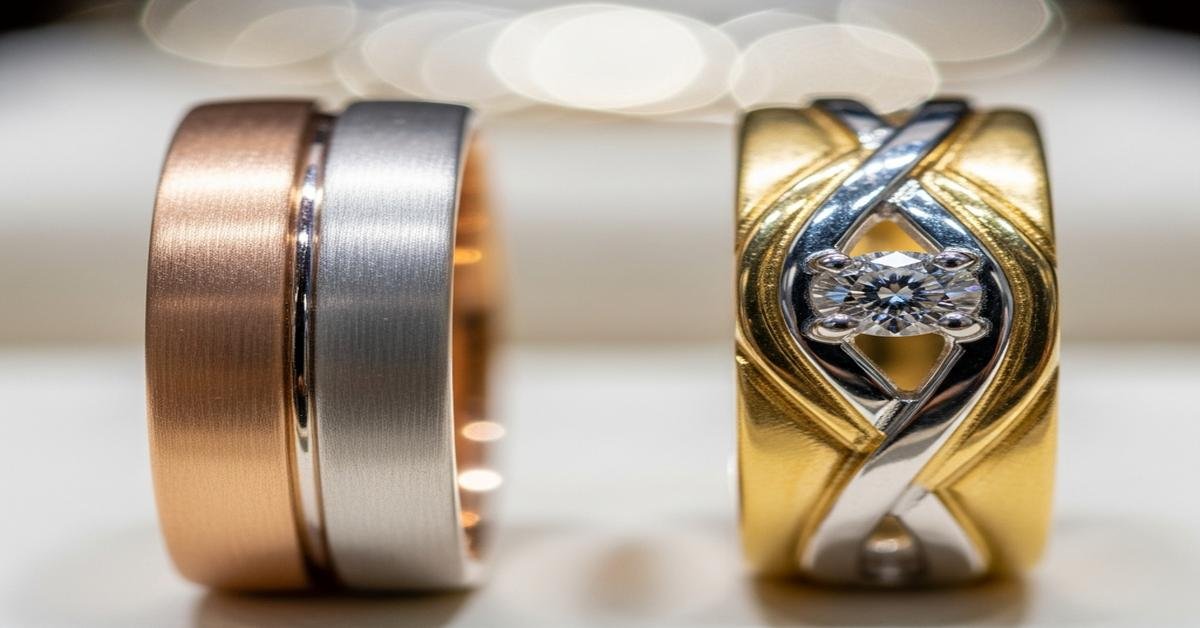
Two-tone rings can look fresh and modern. They also raise real questions about durability and repair. This article explains the trade-offs. I cover how two-tone rings are built, what breaks, what repairs cost, and how to choose designs that age well. You’ll get practical steps to avoid surprises and keep a two-tone ring looking sharp for years.
How two-tone rings are made — and why that matters
There are three common methods to get two metals together in a ring:
- Soldered or fused bands: A strip of one metal is soldered to a strip of another. This is common for 14k yellow center with white-gold edges.
- Inlays or overlays: A thin ribbon of metal (for example, 0.3–0.6 mm) is inset into a groove in the main shank and secured mechanically or with solder.
- Bimetal fabrication or diffusion bonding: The metals are bonded under heat and pressure; used for high-end pieces and harder to alter later.
Why this matters: each method determines how the joint behaves under heat, stress, and wear. Soldered seams are visible and can open when the ring is resized. Diffusion-bonded rings are hard to resize without cutting through the bond.
Common wear problems and the mechanics behind them
Two issues come up repeatedly: finish loss (plating wear) and mismatch in metal hardness/wear.
- Plating wears off: White gold is usually rhodium plated. Typical rhodium thickness is about 0.2–1.5 microns. That thin layer will wear with daily use and show the warmer gold underneath. Expect visible change within 1–3 years, sooner on high-contact areas.
- Different metals age differently: Platinum and 18k yellow gold respond to wear in different ways. Platinum displaces and forms a patina of tiny scratches. 18k gold is softer and loses metal, changing the profile over time. That can create uneven edges at a two-tone seam.
- Galvanic effects and tarnish: Two dissimilar metals in contact plus sweat or water can speed tarnish on the less noble metal (for example, silver next to gold). It’s not catastrophic, but it can cause cosmetic darkening between metals.
Repairs: what’s harder, and why
Resizing and repairs become more complex with multiple metals because of melting points, solder compatibility, and visible seams.
- Resizing: Increasing size usually means cutting the shank and adding metal that matches the original alloy and finish. If the ring is two-tone—say a 6 mm band with an 18k yellow center and 14k white edges—the jeweler must match both alloys, keep the seam invisible, and restore the inlay. That takes more time and can cost more. Typical ranges: gold resizing $40–$150, platinum $100–$300.
- Solder/ joint visibility: Solder flows differently into different metals. A 14k to 18k join will often be visible unless finished carefully. Diffusion-bonded rings may need the bonded section removed—sometimes replacing the entire inlay.
- Stone and setting issues: If prongs cross a metal boundary, retipping prongs or rehabbing a head becomes tricky. Heat from soldering can loosen stones, especially heat-sensitive gems like opals, emeralds, and some treated diamonds.
- Platinum vs gold: Platinum requires higher heat and different solder. A joint between platinum and gold often needs laser welding to avoid damaging either metal. Laser welding raises labor costs—typical laser repairs run $100–$400 depending on work complexity.
When two-tone is a smart, low-risk choice
Two-tone is stylish and practical when designers anticipate wear and repairs. Look for these features:
- Contrasting inner band: A yellow-gold interior with a white outer surface keeps the contrast away from daily contact. The inside color shows only at an angle and is less likely to need frequent rehabbing.
- Thicker inlays: An inlay of at least 0.5–0.8 mm mechanically set into a 1.2–2.0 mm groove stays put better than a super-thin overlay.
- Matched alloys: 14k/14k combinations (for example, 14k yellow + 14k white) are easier to solder because the karat and base alloys are closer. Mixing 18k with 14k makes repair harder because of soft/hard differences and melting behavior.
- Solid bicolor metal: Rings made from solid two-metal blanks or that use diffusion bonding are durable but more expensive. They are less prone to inlay separation.
Maintenance and predictable repair costs
Follow this simple maintenance schedule to avoid surprises:
- Every 6–12 months: Clean and inspect prongs and seams. Small problems are cheaper to fix.
- Every 1–3 years for white gold: Expect rhodium replating. Typical cost: $40–$120. If you choose to keep the white gold warm underlayer, you can skip plating.
- When resizing: Ask for a quote that lists work for each metal. If platinum is involved, budget for laser welding.
Buying checklist — avoid a future repair nightmare
Before you buy, ask the jeweler these concrete questions:
- What are the exact alloys? (Example: 14k white gold, 18k yellow gold, 95% platinum.)
- How is the two-tone join made: soldered, inlaid, or diffusion bonded?
- Can the ring be resized? If so, who will perform the work and what is the cost range?
- Is the white metal rhodium plated? If yes, how thick is the plating and what is the replating cost?
- Do prongs or settings cross the metal boundary? How will stone safety be ensured during repair?
Two-tone rings are not inherently a repair nightmare. But they require more planning than single-metal rings. Choose matched alloys, thicker inlays, and a reputable jeweler who understands laser welding and alloy compatibility. With the right design and maintenance, a two-tone ring can stay stylish and serviceable for decades.