Blog
Hearts & Arrows: What You Actually See Without a Loupe (UK Edition)

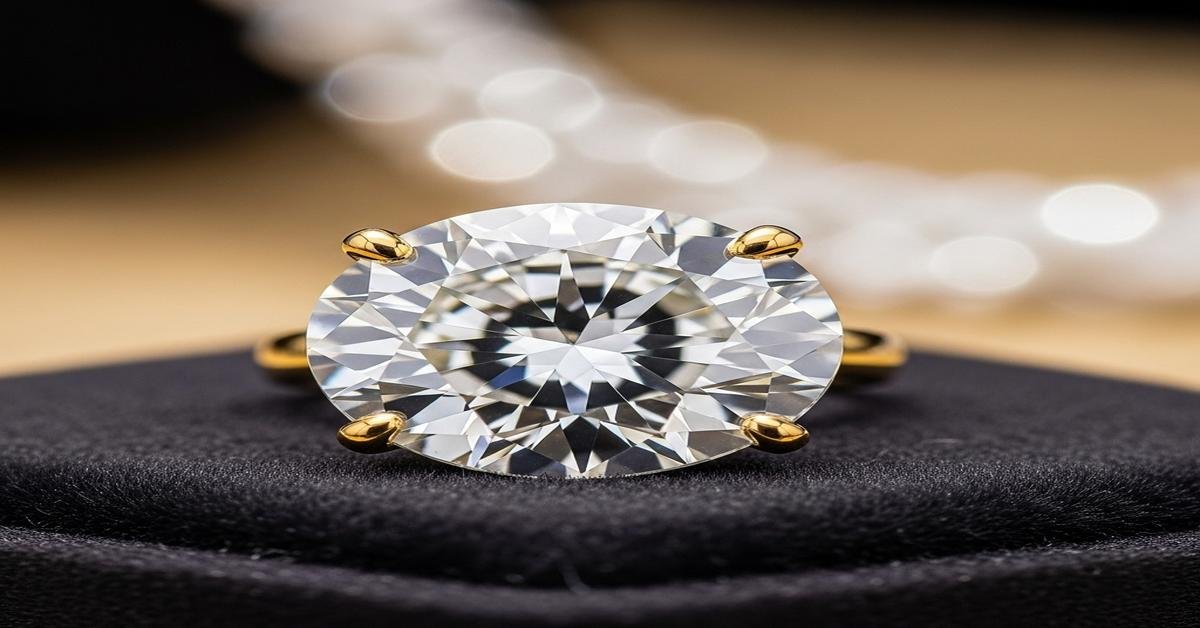
Hearts & Arrows is a term you’ll see a lot when shopping for a round brilliant diamond. It promises perfect optical symmetry — a neat pattern of eight arrows when you look from the top and eight hearts from the bottom. What many buyers don’t realise is that the clear, crisp pattern you see in marketing photos usually needs special viewing equipment. This article explains, in practical terms, what you can actually see with the naked eye in a UK shop or at home, why you see it (or don’t), and how to test a diamond yourself without a loupe.
What Hearts & Arrows actually are
Hearts & Arrows (H&A) describes an optical phenomenon created by extremely precise facet shape and alignment in a round brilliant cut. The pattern depends on:
- Proportions — pavilion angle, crown angle, table size and overall depth. Typical H&A-friendly pavilion angles are around 40.6°–41.2° and crown angles around 33.5°–35.0°. These ranges produce balanced light return and symmetry.
- Facet accuracy — mirror-like facet junctions with tight tolerances on angles and girdle thickness. Small misalignments wash out the pattern.
- Polish and symmetry grades — most true H&A diamonds have excellent or ideal polish and symmetry on grading reports.
Why this matters: the pattern is an interference and reflection effect. When facets are matched precisely, light reflects back in a way that creates the repeated arrow or heart shapes. If proportions or facet junctions are off by fractions of a degree, the pattern breaks apart.
Can you see H&A without a loupe?
Short answer: sometimes, but not reliably. Here’s why.
- Size matters. A 1.00 ct round is about 6.5 mm across and is the smallest size where many people can sometimes make out broad arrow shapes in good light. At 0.50 ct (~5.0 mm) the pattern shrinks and becomes hard to resolve with the naked eye. In practical UK engagement-ring shopping, diamonds between 0.30–1.50 ct are common — expect to struggle under 0.70–0.80 ct.
- Lighting and background. H&A patterns show best under even, diffused light that emphasises contrast between dark and bright facet reflections. Harsh spotlights or mixed indoor lighting make the reflection pattern noisy. Shops with multiple spotlights or warm-tinted LEDs will hide or distort the shapes. Natural daylight (north-facing), or a single cool white light in a controlled viewer, helps reveal patterns.
- Viewing angle. Arrows appear when looking straight down the crown; hearts appear from the pavilion (underneath). Without a H&A viewer that isolates reflections, you’ll need to hold the diamond almost perfectly level and still to see anything. Hand tremor and setting style complicate this.
What you’re likely to see in a shop
In a typical UK jewellery shop, you’ll probably see one of three outcomes:
- Nothing obvious. The diamond flashes and sparkles, but you can’t pick out arrows or hearts. This is normal for stones under ~0.7 ct or those viewed under shop spotlights.
- Blurred/partial shapes. You may notice faint arrowlike streaks or blocky dark areas in very well cut stones around 0.8–1.2 ct. These indicate good symmetry but not the crisp H&A seen with instruments.
- Clear pattern — only with the right setup. If the retailer uses an H&A viewer, ideal-scope or ASET, you’ll get the classic photos. That depends on a controlled viewer and often a branded stone. Without that equipment, crisp patterns are rare.
How settings and metal affect what you see
Settings change the light that reaches the diamond. Why this matters:
- Prongs vs bezel: Prong settings let more light reach the crown and can help patterns appear. Bezel or heavy halo settings block side light and reduce visible contrast.
- Metal colour: A very white metal like 18ct white gold (alloyed for 75% gold then rhodium-plated) or platinum 950 reflects neutral light back into the stone. Warm metals (9ct yellow gold, 37.5% gold) add yellow reflection and can mask subtle contrasts.
- Side stones and halos: These change the reflection environment and often overwhelm the delicate H&A pattern. If you plan a halo ring, anticipating to see a clean H&A pattern when set is unrealistic.
Practical checks you can do without a loupe
Before spending extra for a branded H&A stone, try these simple tests in store or at home:
- Hold it level in cool daylight. Look dead-on at the crown. Rotate slowly. If you see eight consistent arrowheads that rotate as you turn the stone, the pattern is strong.
- Use your phone camera. Zoom in and take a photo straight down. The camera can resolve finer detail than your eyes. Don’t rely on digital filters; turn off HDR and automatic enhancement.
- Ask for ASET/Ideal-scope images. These images show how light is returning from the stone. A balanced red/green pattern in an ASET image usually means excellent cut performance even if you can’t see H&A directly.
- Compare two stones side-by-side. Compare brilliance and contrast, not just H&A claims. A stone that looks brighter and livelier in your lighting is likely to deliver more pleasing sparkle than one that only advertises H&A on paper.
Shopping advice for UK buyers
If you want the optical precision H&A promises, expect to pay a premium. Branded H&A stones, or those with AGS 0 / GIA Excellent proportions and matching ASET/Ideal-scope photos, will cost more because cutters take extra time to hit tight tolerances.
- Don’t buy H&A sight unseen. Ask for real photos or videos of the actual stone under neutral light and ASET/Ideal-scope images.
- Prioritise what you’ll notice. If your ring will be a small 0.3–0.6 ct stone or a halo setting, money spent chasing H&A might be better used on a larger carat or higher colour/clarity. You’re unlikely to see crisp arrows in those settings.
- Consider metal choice. If you want visible contrast and a white look, 18ct white gold (rhodium-plated) or platinum 950 are good choices. If you prefer yellow gold, accept that reflections will be warmer and may mask subtle patterns.
Bottom line: Hearts & Arrows is a meaningful indicator of very high cutting precision. But without a loupe or an H&A viewer, most buyers will at best see faint shapes in stones above roughly 0.7–0.8 ct under the right light. For most UK engagement-ring buyers, aiming for excellent proportions, good polish and symmetry, and checking ASET/Ideal-scope results gives a better real-world outcome than chasing a pattern you may never see once the stone is set.