Blog
DEF vs Near-Colourless: Will Your Setting Show the Tint?

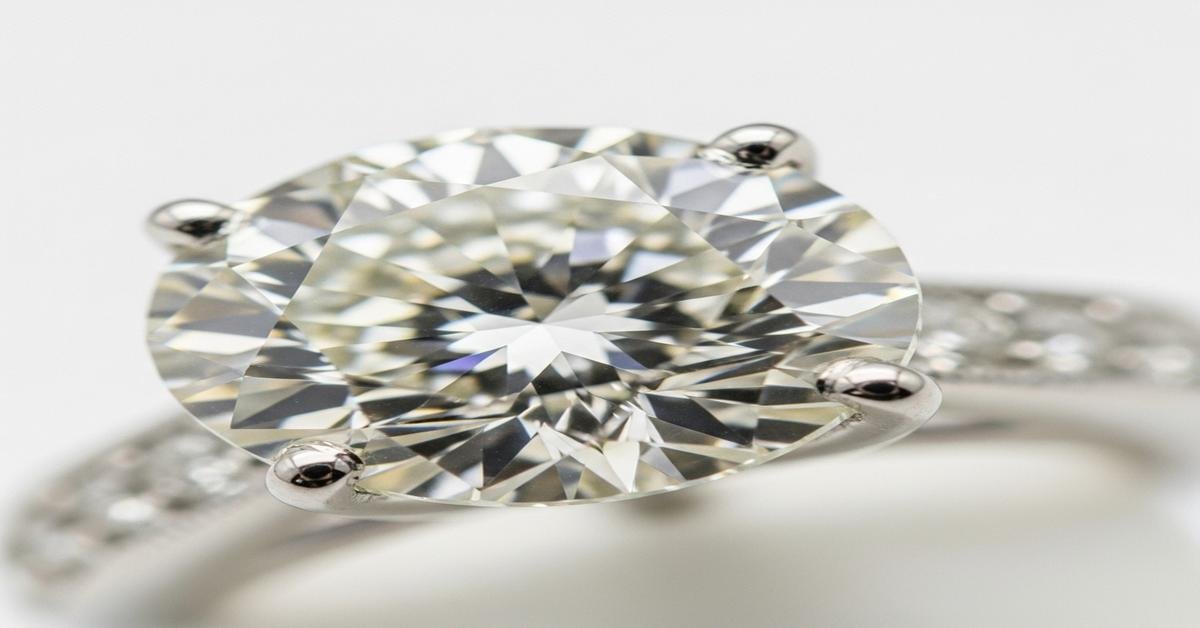
Choosing between D–F (colorless) and near-colourless (G–J) diamonds affects both price and appearance. The main question is this: will the setting and the way the diamond is worn hide or reveal the faint yellow tint that separates these grades? The answer depends on several measurable factors: diamond size and shape, setting metal and design, lighting, and how closely you or others will inspect the stone. Below I walk through the practical details so you can pick the right grade for your ring and budget.
How grading relates to what you see
Grading is done under controlled conditions by trained graders. The difference between D and F is subtle. The difference between G and J is small, but visible under some conditions. Why? Because D–F diamonds contain essentially no body colour. G–J diamonds have a slight warmth that shows up against a white background or under warm light.
Key point: The human eye sees the diamond at arm’s length and under varied lighting. What passes as “colourless” to most buyers often falls in the G–H range once mounted and viewed casually.
Diamond size and shape — why mm and carat matter
Larger diamonds show tint more easily because there is more body to display colour. For example:
- 0.50 ct round (~5.1 mm): tint is often not noticeable in G–H grades, especially in white metal settings.
- 1.00 ct round (~6.4 mm): G–H will be eye-clean in white metals; in yellow gold or in bezel settings you may notice warmth at close range.
- 2.00 ct round (~8.2 mm): even small colour can be evident. Consider D–F or high G.
Shape matters too. Brilliant cuts (round, cushion, brilliant oval) reflect white light and mask tint better. Step cuts (emerald, asscher) show colour more because they have larger, flat facets and less scintillation.
Metal colour and alloy — how settings reflect or absorb tint
The setting metal both reflects into the diamond and frames it. That changes perceived colour.
- Yellow gold (14k = ~58% gold, 18k = ~75% gold): Warm metal reflects yellow into the diamond. A G or H mounted in 14k or 18k yellow gold will look warmer than the same diamond in a white metal.
- Rose gold (higher copper content): Adds pinkish warmth. Similar to yellow gold, it accentuates tint.
- Platinum (commonly 95% Pt): Naturally white. It doesn’t add warmth. Good for keeping a diamond looking whiter.
- White gold (rhodium-plated): Rhodium gives a bright white finish. A G–H looks very white when freshly plated. Note: rhodium wears off over time and underlying gold (warm) can reappear unless re-plated.
Practical rule: If you choose yellow or rose gold, favor D–F for larger stones or step cuts. If you choose platinum or continuously rhodium-plated white gold, G–H is often acceptable for up to about 1.0–1.5 ct rounds.
Setting type and how it exposes colour
Settings either hide or expose the diamond’s pavilion and girdle, which affects colour visibility.
- Prong/open settings: Allow light through and reduce visible tint. Good for near-colourless grades.
- Bezel settings: Surround the stone with metal. This frames and can show tint more clearly, because the edge of the diamond is contrasted with warm metal.
- Halo and pavé: A halo of small, bright melee that are G–H can make a near-colourless centre appear whiter. Conversely, yellow metal halos can warm the overall look.
- Channel settings: Hold diamonds side-by-side. Adjacent warmer stones can make a centre stone look warmer unless all stones are similarly graded.
Lighting and daily wear — why context changes perception
Light source shifts perceived colour. Incandescent and warm LED lights bring out yellow tones. Daylight is neutral. Most store lighting is intentionally warm to flatter metal and skin. That can make a near-colourless diamond look warmer in a store than it will in daylight.
Also consider how others see the stone. At arm’s length, most observers will not detect G vs H in a small to mid-size round diamond. Close inspection or magnification will make grading differences more obvious.
Fluorescence and other factors that mask or highlight tint
Fluorescence (blue glow under UV) can make some yellowish diamonds look whiter in daylight. However, strong fluorescence can also make a diamond look hazy in other lighting. Count fluorescence as a bonus or a caution, not a simple fix.
Specific buying guidelines
- For a 0.25–0.75 ct round in white metal (platinum or rhodiumed 14k white gold): G–H is a practical choice. The diamond will appear white to most observers.
- For a 1.0–1.5 ct round in white metal: G is usually safe; choose H only if budget is tight and you want a brilliant cut.
- For diamonds over 2.0 ct or for step cuts (emerald, asscher): Aim D–F, or very high G, because size and cut show more colour.
- For yellow or rose gold settings: Prefer D–F for stones 1.0 ct and larger; for small stones (melee), G–I is fine because the metal will warm the look anyway.
- For bezel settings: Lean colorless. The metal edge frames the stone and makes tint more apparent.
- For halo designs: Use a halo of very white melee (G or better) to visually lift a near-colourless centre stone.
Final checklist before you buy
- Look at the stone mounted in the exact setting under various lights. Ask for photos in daylight and warm indoor light.
- Check the shape and size: larger size or step cuts need higher grade.
- Consider metal choice and whether white gold will be re-plated over time.
- If budget limits you, prioritize cut quality and brilliance over colour by one grade—well-cut light return can hide tint better than a higher colour but poor cut.
In short: settings matter as much as the diamond grade. For most everyday rings under 1.5 ct in white metal, G–H will look clean and white to the eye. For yellow/rose gold, bezel settings, large stones, or step cuts, move toward D–F. Use the checklist above to match the grade to the real-world look you want.