Blog
Tsavorite vs Emerald: The Green That Survives Daily Wear

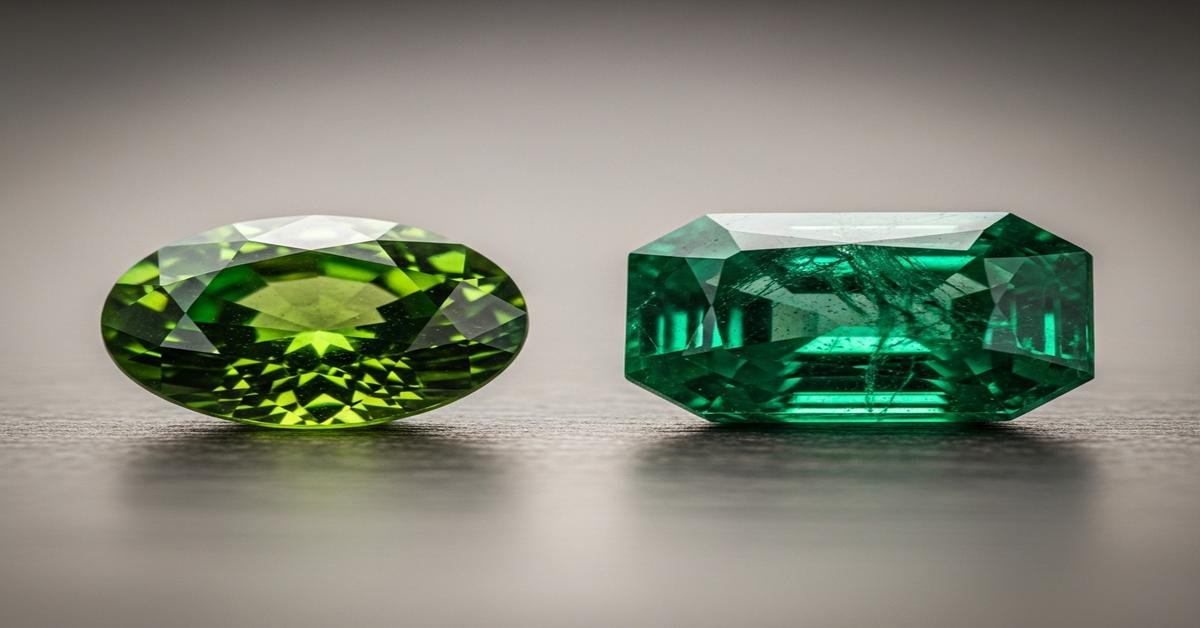
When you want a green gemstone that can survive daily life, choice matters. Two of the most popular greens are tsavorite and emerald. They look similar at first glance. But they behave very differently under a ring-bump, in a cleaning bowl, or after years of wear. Below I compare them with practical detail so you can pick the best green for everyday jewelry.
Basic mineral facts and sources
Tsavorite is a green grossular garnet. It typically comes from Kenya and Tanzania. Its specific gravity is about 3.60–3.65. Tsavorite is usually untreated and is valued for its rich, pure green that leans slightly toward yellow-green on occasion.
Emerald is a green variety of beryl. Major sources are Colombia, Zambia, and Brazil. Its specific gravity is lower, about 2.68–2.78. Emerald’s classic color is a bluish-green to deep green.
Hardness, toughness and what that means for wear
Hardness and toughness are different. Hardness (Mohs) measures scratch resistance. Toughness is resistance to breaking, chipping, or cleaving.
- Mohs hardness: Emerald (beryl) is about 7.5–8. Tsavorite (garnet) is about 7–7.5. On paper emerald is slightly harder.
- Toughness: Tsavorite wins. Garnets are isotropic and have no prominent cleavage. Tsavorite resists chipping and sudden impact better. Emeralds regularly contain needle-like inclusions and often have weak planes (cleavage), making them prone to chips and fractures even if they score slightly higher on Mohs.
Why it matters: an emerald can scratch less than a diamond but still break if bumped. A tsavorite is less likely to chip on impact and tends to tolerate rings and daily knocks better.
Clarity, treatments and appearance
Emerald clarity often shows inclusions called “jardin.” These inclusions are common and accepted as part of emerald’s character. Most commercial emeralds are treated with oils or resins (cedarwood oil or polymer resins) to improve apparent clarity. Those treatments can be routine and stable, but they may require re-oiling or careful cleaning over time.
Tsavorite clarity tends to be cleaner eye-visible. Tsavorite is rarely treated. That means what you see is usually what you get: bright, saturated color with strong sparkle because garnets take a brilliant cut well.
Color and cutting choices
Emeralds historically are cut in emerald cuts (rectangular step cuts). This cut preserves carat weight and reduces stress, which helps protect an included gem. The step cut also emphasizes color over sparkle. Example: a 2.0 ct emerald-cut emerald might measure about 8.5 x 6.0 mm.
Tsavorite is commonly cut as rounds, ovals, or cushions with brilliant faceting to maximize brightness. Example: a 1.5 ct round tsavorite is roughly 6.5 mm diameter and will show lively dispersion and fire.
Color difference: emeralds lean more into bluish-green. Tsavorites tend to be a vivid, pure green often with a yellowish cast. Which you prefer is personal, but note that tsavorite’s brighter tone reads as more “juicy” in smaller sizes.
Price and value
Price depends on color, clarity, size, and origin. General observations:
- Top-quality Colombian emeralds with fine color and modest clarity can reach $3,000–$30,000+ per carat depending on size and origin.
- Fine tsavorites—vivid green, eye-clean—typically range from roughly $400–$4,000+ per carat. Exceptional stones can exceed that, but overall tsavorite usually costs less than comparable top-color emeralds.
Why the gap? Emeralds have rarity, long-standing market demand, and historic prestige—especially Colombian stones. Tsavorite is rarer in volume than many green gems but gained market recognition more recently, so prices are generally lower for similar-looking stones.
Practical settings and metal choices
If you want daily-wear jewelry, design choices matter as much as the gem.
- For tsavorite: a four-prong setting or low bezel in 14k or 18k gold (58.3% and 75% gold respectively) is fine. Tsavorite tolerates light cleaning including ultrasonic and steam in most cases, though always check the specific stone.
- For emerald: prefer protective settings—full bezel or sturdy low prongs with a halo. Keep the setting slightly raised to protect from side knocks. Avoid exposing emeralds to potential hard knocks or heavy pressure. Do not use ultrasonic or steam cleaners on oiled emeralds; these can remove oils and damage appearance.
Practical tip: for rings used daily, a bezel or flush setting reduces the risk of chipping for both gems. For engagement rings, many professionals recommend tsavorite or a protected emerald in a bezel if you lead an active life.
Care and maintenance
Cleaning and maintenance differ:
- Tsavorite care: clean with warm water, mild dish soap, and a soft brush. Most tsavorites tolerate ultrasonic cleaners. Check prongs periodically and have stones professionally inspected annually.
- Emerald care: clean with a soft cloth and mild soap. Avoid steam and ultrasonic cleaners—these can strip oils. If an emerald is treated, re-oiling by a professional jeweler may be advisable every few years. Always inspect prongs and settings regularly; inclusions can affect stability.
Certification and buying advice
Ask for a gem lab report for any high-value purchase. Reports from trusted labs (GIA, SSEF, AGTL) will note treatments, origin when possible, and clarity characteristics. For example, a report will state if an emerald is oiled or if a tsavorite is heated (rare).
Practical buying checklist:
- Confirm treatment status—oiled, resin-filled, or untreated.
- Ask about origin if color and resale value matter to you.
- Compare similar sizes in mm or carats—specific gravity differences mean a 2 ct emerald will look larger than a 2 ct tsavorite.
- For everyday rings, prioritize toughness and protective settings over the absolute “best” color if you want fewer repairs over time.
Final recommendation
Choose tsavorite if you want a lively, durable green that stands up to daily wear with less maintenance. It’s tougher and less likely to chip. Choose emerald if you value classic bluish-green color and accept extra care and protective settings. Emerald carries historic prestige and can be a meaningful heirloom, but it requires more cautious handling and periodic maintenance.