Blog
Depth % vs Table %: The Two Numbers Shrinking Your Stone Face-Up

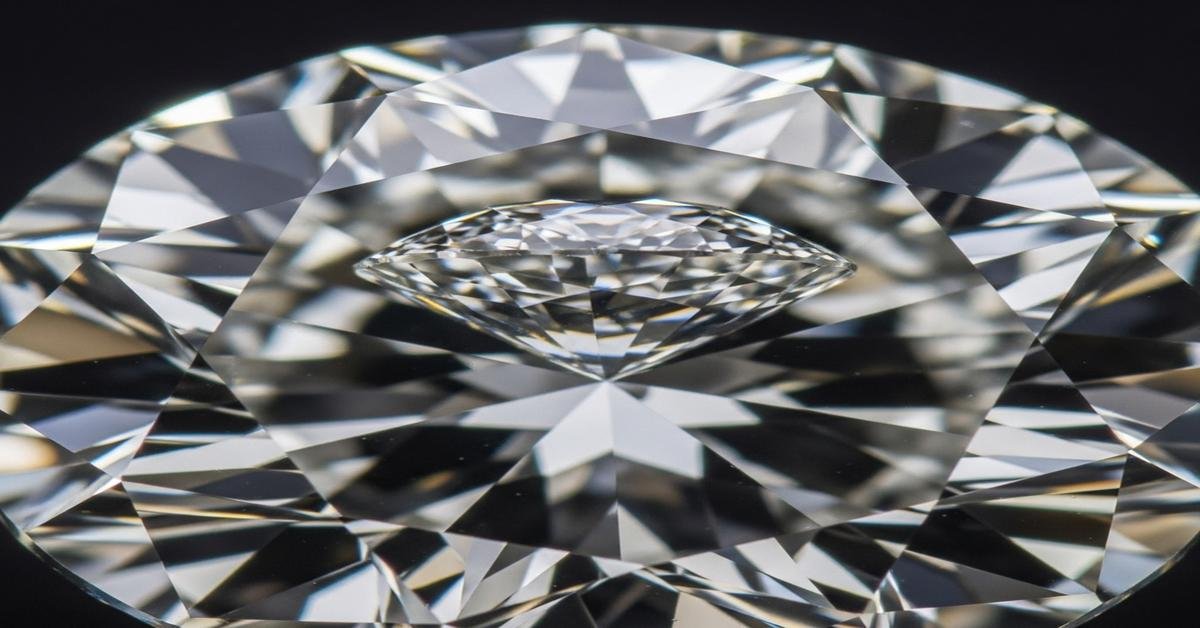
Depth percentage and table percentage are two numbers you’ll always see on a diamond report. They look harmless, but together they determine how big a stone looks face-up and how it handles light. Put simply: depth % controls how tall the diamond is relative to its face, and table % controls how much of the crown is flat. Both change the apparent diameter, brightness, and contrast pattern you see in the face-up view.
How depth % and table % are measured
Depth % = (total depth ÷ average girdle diameter) × 100. Total depth is the millimeters from table to culet. If the depth goes up and weight stays the same, the diameter must shrink. That’s the basic reason a “deep” stone looks smaller.
Table % = (table width ÷ average girdle diameter) × 100. The table is the flat facet on top. A larger table increases the flat surface you see, which affects how light is returned and how “open” the face-up looks.
Why these two numbers shrink your stone face-up
Carat weight is a measure of mass, not face-up size. The same carat weight can be cut shallow and wide or deep and narrow. When a cutter increases pavilion depth to achieve a certain weight, the diameter (face-up size) decreases. Conversely, a shallower cut increases diameter, so the diamond appears bigger. Table % affects perceived size too: a very large table can make the face look broader but flatter, while a small table gives more crown and apparent depth in the face, which sometimes makes a stone look smaller.
Optical trade-offs: spread vs light performance
There’s no free lunch. Increasing spread (larger face-up diameter for the same carat) usually means a shallower pavilion or reduced crown height. That can cause light leakage — the stone looks flat and less lively. Making a diamond deeper can preserve light return but sacrifices face-up millimeters.
Similarly, a very large table (for example, above the common range for a round) can lower scintillation and contrast because the crown is too flat to create return angles that break light into flashes. A very small table boosts contrast but can make the diamond look smaller face-up.
Practical ranges and what they mean
These ranges are practical guidelines used by cutters and graders. They are not absolute rules, but they help you balance size and light:
- Round brilliant: Depth ~58–62%, Table ~53–58%. Tolkowsky’s classic model used crown angle ~34.5° and pavilion angle ~40.75° with a table near 53% — that’s the starting point for balanced light return and good spread.
- Oval, pear, marquise: Depths commonly run 58–66%, Tables 53–62%. These shapes also have length-to-width ratios that strongly affect face-up look, so table or depth alone won’t tell the whole story.
- Cushion and emerald cuts: Pavilion and step facets change the rules. Cushion depths often run 60–68% and tables 56–68%. Emerald cuts typically have larger tables and deeper profiles; expect depth ~60–68% and table ~60–70%.
The broader ranges reflect that fancy shapes rely on facet structure and length-to-width proportions more than round brilliants do.
Concrete example: the 1.00 ct round
A typical well-cut 1.00 ct round diamond measures about 6.5 mm across. If the cutter makes the stone deeper to keep more weight, the diameter might drop to 6.2–6.3 mm. That’s a 0.2–0.3 mm loss — small numerically but noticeable in hand and in finger coverage. Conversely, a very shallow 1.00 ct might measure 6.7–6.8 mm, but it will often look less lively because of light leakage.
So when you see two 1.00 ct stones with the same color and clarity, the one with the larger diameter will usually look bigger face-up, but it might not sparkle as much if it’s too shallow.
Red flags and numbers to check
- Round depth <58%: watch for excessive spread and light leakage.
- Round depth >62–64%: expect reduced face-up diameter and potential dark or “nail-head” center.
- Table >62% (round): crown is likely too flat; contrast and dispersion fall off.
- Table <48% (round): very small table can make the stone look busy and reduce apparent size.
- Inconsistent lab measurements: depth and table are based on average girdle diameter. A very thick or irregular girdle can skew percentages.
Other technical details that matter
Depth % and table % aren’t the whole story. Pavilion and crown angles determine where light is reflected inside the stone. A pavilion angle around ~40.7° and a crown angle around ~34.5° (Tolkowsky-style) give good light return in many cases, but modern cutting styles produce excellent results across a range of angles.
Girdle thickness, culet size, and facet symmetry matter because they change how depth and table numbers translate into real-world light behavior. Two diamonds with the same depth% and table% can perform very differently if one has poor symmetry or a very thick girdle.
How to use this when buying
- Start with the millimeter measurements on the report — compare diameter to expected carat sizes (1.00 ct ≈ 6.5 mm, 0.50 ct ≈ 5.1 mm, 2.00 ct ≈ 8.2 mm). A larger diameter for the same carat usually looks better face-up, but check light return.
- Use depth and table percentages as indicators, not absolutes. Look for balanced numbers in the recommended ranges for the shape you want.
- Ask for face-up photographs and light-performance images (Ideal-Scope or ASET) if possible. Those show actual leakage and contrast better than numbers alone.
- Prioritize what matters to you: if face-up size is the priority, accept a slightly shallow cut but verify light return; if brilliance and scintillation matter more, accept a slightly smaller face-up for a deeper, better-returning cut.
Depth % and table % work together to define a diamond’s face-up personality. Learn the typical ranges for the shape you want, compare millimeter sizes, and always confirm performance visually. That will keep you from paying for a carat weight that looks much smaller than you expect.