Blog
Princess Cut Comeback? What UK Brides Are Quietly Choosing

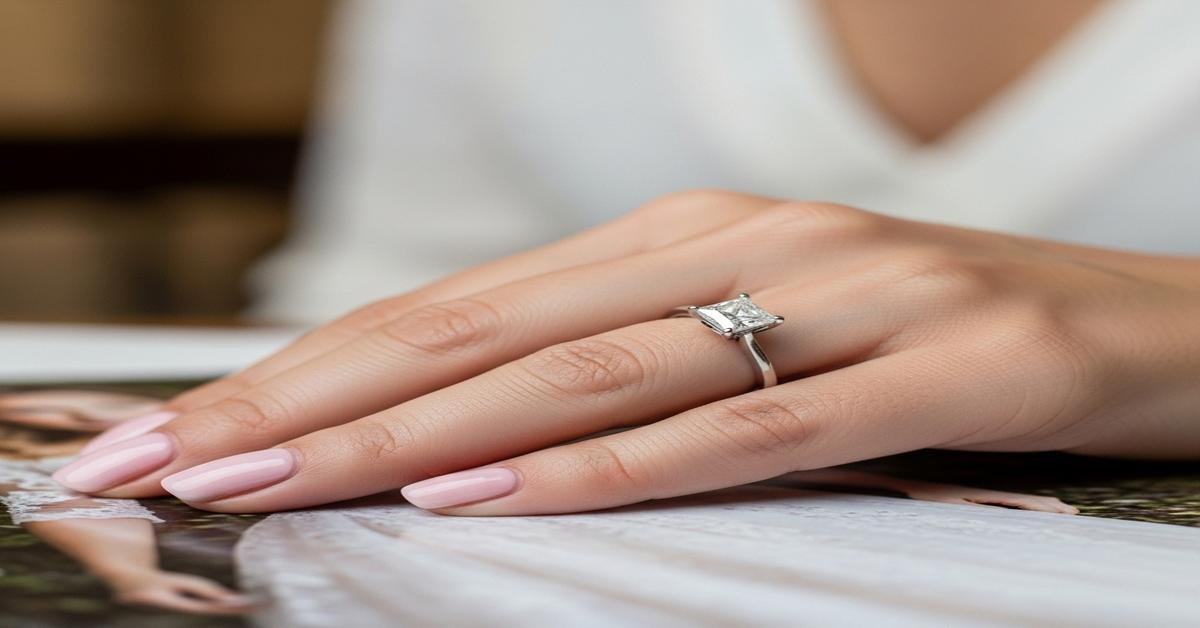
The princess cut is quietly making a comeback among UK brides. It’s not a loud fashion trend but a practical preference. Brides I speak with want a modern square look that still reads classic. They want strong sparkle, a lower price-per-carat than rounds, and a ring that works with both minimal and vintage settings. Below I explain why the princess is resurfacing, what to watch for when buying, and how to choose the right metal and setting for UK life.
Why brides are choosing princess again
There are three simple reasons: sparkle, value, and versatility.
- Sparkle. The princess is a brilliant-style square cut. Its faceting reflects a lot of light, so it delivers noticeable scintillation on the finger. Brides who want lively sparkle without the round’s premium are drawn to it.
- Value. Princess cuts tend to cost less per carat than round brilliants because cutters can save more rough crystal. That means you can usually buy a larger-looking carat weight on the same budget. In practical terms, a princess of 0.9–1.1ct will appear similar in presence to a round of the same weight but often at a lower price.
- Versatility. The square shape fits many settings: classic four-prong solitaires, protective V-prongs, halo designs that increase perceived size, and three-stone styles. It pairs well with straight and tapered bands, so brides who want to stack or combine rings find it handy.
Cut, size and what the numbers mean
Princess-cut measurements vary by depth and pavilion. Don’t rely on carat alone. Ask for the stone’s exact length × width in millimetres and, if possible, a light performance image (ASET or ideal-scope).
- Typical millimetres (approximate). A well-cut princess around 0.50ct usually measures about 4.3–4.6mm. A 1.00ct princess is often near 5.5–6.0mm. These are ranges: depth affects face-up size.
- Why depth matters. A deep pavilion can hide weight under the surface, making the stone look smaller face-up. Conversely, a very shallow cut can reduce brilliance. Ask the seller for depth and table percentages and for images showing how the stone performs in light.
- Cut reports. Unlike rounds, GIA doesn’t give an overall cut grade for princesses. Trust reputable vendors who provide proportions and performance images, or certificates from laboratories like IGI that include measurements.
Color and clarity — smart trade-offs
Princess cuts show colour differently from rounds. The square shape and faceting can make body colour more visible at the corners or through the table, and inclusions can be noticeable depending on placement.
- Color. For a white metal setting (18ct white gold or platinum 950), aim for G–H for a balance of value and appearance. If you choose yellow or rose gold, you can comfortably go to I–J because the warmer metal masks minor colour.
- Clarity. VS2–SI1 is a practical zone for many brides. For stones over 0.8–1.0ct, consider VS2 to avoid visible inclusions. SI1 can be fine if the clarity plot shows inclusions away from the table and corners, and you can inspect the stone in person.
- Example. A 0.9ct princess, H color, VS2 clarity in a platinum V-prong setting will look very white and clean, while the same stone in 18ct yellow gold could be safely an I color with SI1 clarity if budget matters.
Durability and protective settings
Princess cuts have sharp corners that are vulnerable to chipping. That’s not a deal-breaker, but it changes which settings work best.
- V-prongs. These protect corners while keeping the square look. They’re the most common practical choice.
- Bezel or partial bezel. Offers the best protection but can soften the square profile visually.
- Halo settings. A halo hides and protects the corners and increases perceived size. If you want a statement ring without a larger centre stone, halo is an efficient route.
- Maintenance. Have prongs checked annually. If you choose white gold in the UK, expect rhodium replating every 1–3 years to maintain the bright white finish; 18ct gold is 75% gold, 14ct is 58.5%, and platinum 950 is 95% platinum and requires less re-plating.
Metal choices and UK practicalities
Choice of metal affects look, cost, and durability.
- Platinum 950. Heavier, naturally white and hypoallergenic. More scratch-resistant in appearance over time and a common choice for busy hands or those who want minimal maintenance.
- 18ct white gold. Classic and slightly warmer under plating. It’s 75% gold alloyed with palladium or nickel; most pieces are rhodium plated for a bright finish. Cheaper than platinum but needs occasional replating.
- 9ct and 14ct gold. 9ct (37.5% gold) and 14ct (58.5%) lower costs but also softer. 9ct is very common in the UK for budget-friendly pieces.
- Recycled metals and ethical sourcing. Many UK brides ask for recycled gold or trackable platinum. If provenance matters, request supplier documentation.
Setting styles UK brides are choosing now
Across small independent jewellers and online bespoke makers, the following styles are popular because they suit UK lifestyles and ring stacking choices.
- Minimal four-prong solitaire. Clean, modern, and shows the stone. Choose V-prongs to protect corners.
- Halo solitaire. Makes the centre look larger and adds protection. Works well with delicate pavé shoulders for extra sparkle.
- Three-stone or tapered shoulders. Adds sophistication without being flashy. Small trapezoid side stones can complement the square centre.
- Vintage-inspired with milgrain or filigree. For brides who want square but with antique character.
Practical buying checklist
- See the stone in person if possible. Check face-up size and sparkle under natural light.
- Ask for exact L×W in mm and depth/table percentages. Request light performance images (ASET/ideal-scope) if available.
- Choose a V-prong or bezel if you lead an active life.
- Balance color and clarity by metal: white metal = G–H; yellow/rose = I–J. Aim for VS2–SI1 clarity depending on size.
- Decide mined vs lab-grown early. Lab-grown commonly lets you move up a size or clarity grade for the same price.
- Pick a durable metal for daily wear—platinum 950 for low maintenance; 18ct white gold for a lower cost with periodic replating.
- Budget example: on the UK market, a well-cut 0.8–1.0ct princess in G–H, VS2, set in 18ct white gold sits in a mid-range budget; the same budget may get a 1.2ct lab-grown stone with similar face-up presence.
In short, the princess cut fits a lot of real bride needs: it’s bright, flexible in design, and often more attainable than a round of the same visual impact. If you like clean geometry with plenty of fire and the option to move between classic and contemporary settings, it deserves a close look.