Blog
Feather vs Crystal: Which Inclusion Spooks UK Insurers More?

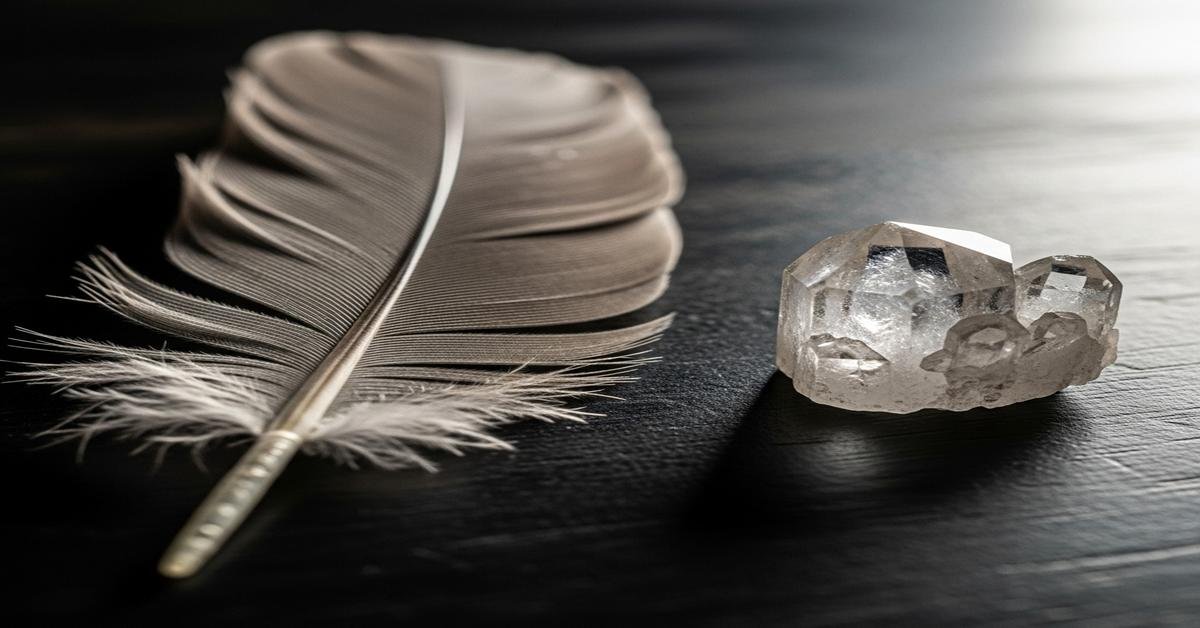
When you open a valuation or a lab report and see the words “feather” or “crystal,” it feels technical. Owners want to know: which inclusion will make my insurer nervous? The short answer is: **feathers** generally spook underwriters more than crystals. Below I explain why, with real, practical detail so you can talk to valuers and insurers with confidence.
What exactly are feathers and crystals?
Feathers are internal fractures or tiny fissures inside a gemstone. They look whitish or translucent and can run toward the surface. In diamonds they may appear as lines or clouds; in coloured stones they often follow cleavage planes. Feathers are structural—meaning they weaken the stone.
Crystals are solid mineral inclusions trapped inside the host gem. They can be other minerals, gas bubbles, or even tiny crystals of the same species. In emeralds you’ll see a “jardin” of crystals and liquid-filled cavities; in sapphires you might see rutile needles. Crystals are usually rigid, distinct bodies rather than breaks.
Why insurers worry: the risk factors that matter
Insurers underwrite on risk. Three things move risk up: likelihood of loss, size of loss, and proof that the loss wasn’t pre-existing. Feathers and crystals affect these three factors differently.
- Structural risk: Feathers reduce toughness. A feather that reaches the surface or lies close to the girdle can propagate after a knock. That can cause the stone to crack, chip, or even split and fall out. Insurers see this as a likely route to a claim.
- Repairability: A feather that opens to the surface can complicate repair. Recutting or re-setting may be impossible without losing substantial weight. Crystals rarely create the same mechanical weakness.
- Proof and disclosure: Pre-existing feathers can be argued as “inherent vice” or a manufacturing defect if the owner didn’t disclose them. Insurers will ask for pre-loss photos, condition reports, or lab plots to confirm the state before a claim.
How gem type and size change the assessment
Not all feathers or crystals are equal. Underwriters consider gem type, size (ct), and where the inclusion sits (measured in mm from the table or girdle).
- Diamonds: A 1.2 ct round brilliant (~6.8 mm) with a 2 mm feather touching the girdle is a red flag. That feather can open with normal wear. A 0.5 mm crystal under the table is less risky.
- Emeralds: Crystals and fissures are expected. A 2.5 ct emerald cut (approx 9 x 6 mm) commonly has jardin. Insurers acclimatise to that but will still note large feathers that reach the surface because emeralds are brittle.
- Sapphires and rubies: Silk (rutile needles) and isolated crystals are common and rarely cause sudden breakage. Large cleavage-aligned feathers are riskier in heated or fracture-filled stones.
- Metal setting matters: A stone set in 9ct gold (375 alloy) with thinner prongs has higher loss risk than one in platinum 950 with robust shoulders. Platinum is denser and more ductile; it holds stones better under shock.
How insurers actually use lab reports and valuations
UK insurers will look at lab reports (GIA, AGS, etc.) and independent valuations. They care about:
- Clarity grade and plot: The plotted location of an inclusion tells them if it is near a vulnerable edge. A GIA clarity plot showing a feather reaching the pavilion girdle invites questions.
- Photographic evidence: Clear photos at magnification show whether a feather is open to the surface. Insurers prefer images with scale (mm) or a plotted diagram.
- Condition reports: Recent receipts and pre-loss condition notes reduce the chance of a dispute. If you have a 1 ct diamond (6.5 mm) with a known feather and a 12-month-old condition report, the claim handling is simpler.
Examples that show the difference
Example A: A 1.5 ct round brilliant (7.4 mm) with a 1.8 mm feather near the girdle. The feather is visible on a 10x plot and appears to touch the surface. This stone is high-risk because the feather can propagate during normal wear. An insurer may:
- Accept cover but increase premium or excess.
- Require a specialist valuer endorsement or limit on accidental damage cover.
- Ask for strengthened settings (re-pronging) before agreeing full cover.
Example B: A 2.0 ct emerald (8.8 x 6.2 mm) with multiple small crystals throughout the body but no large surface-reaching feathers. This is common for emeralds. The insurer will value the stone at market rate for “included” emeralds. They’re less likely to flag it as a structural risk unless there’s a clear open fissure.
What you should do before you insure
Take practical steps to reduce insurer concern and avoid claim disputes:
- Get a current independent valuation that lists inclusions and includes a clarity plot and high-resolution photos (show sizes in mm).
- Keep receipts and condition reports (date-stamped). They prove the pre-loss state and avoid accusations of nondisclosure.
- Ask your jeweller about treatment risks: Avoid ultrasonic cleaning and aggressive polishing if you have feathers close to the surface. These can open feathers.
- Consider setting upgrades: Stronger prongs, bezel settings, or platinum mounts reduce the chance of a knock reaching a feather.
- Declare anything suspicious up-front: When applying for cover, state the existence of notable feathers. Disclosure avoids claim repudiation for non-disclosure.
Bottom line: which inclusion spooks UK insurers more?
Feathers spook insurers more than crystals because they are breaks, not solid inclusions. Feathers increase the chance of sudden structural failure and complicate repairs. Crystals typically affect value and appearance but rarely cause immediate loss. That doesn’t mean crystals are harmless—large or surface-reaching crystals can still cause problems—but as a rule insurers treat feathers as the greater underwriting risk.
Act like a professional owner: document, disclose, and reinforce. That reduces premiums, avoids disputes, and makes it easier to recover value if something does go wrong.