Blog
Hidden Halo, Hidden Costs: The Bridal Trend No One Mentions

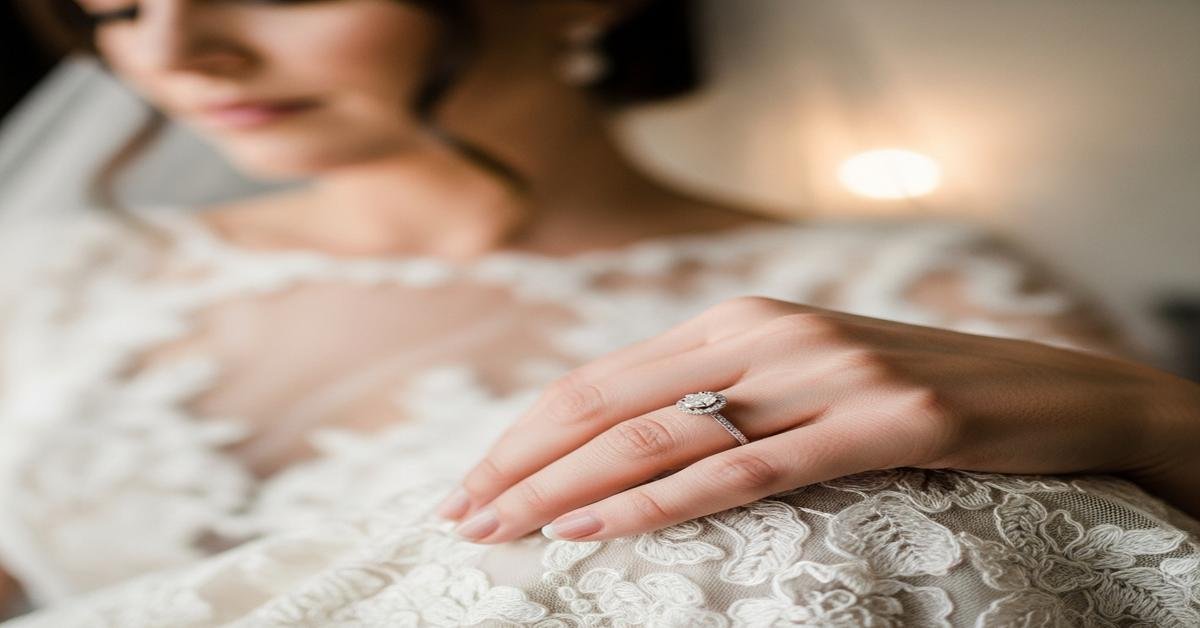
Hidden halo engagement rings look simple from the top but hide a row of small diamonds around the base of the center stone. They add sparkle and make the center appear larger without changing the top silhouette. That visual trick is why the style is trending. What rarely gets discussed are the extra costs and trade-offs that come with tucking diamonds under the head. Below I break down the practical, measurable expenses and maintenance realities so you can decide if the look is worth the long-term price.
What a hidden halo is — and why it matters
A hidden halo is a band of melee diamonds set below the crown of the center stone, typically around the head or under the gallery. Unlike a visible halo that frames the center from the top, the hidden halo is mostly seen from the side or when the ring is tilted. It does three things:
- Optical increase: The extra sparkle at the base reflects light into the crown, making a 1.00 ct round look visually larger. Why it works: light bounces off the melee and into the center instead of being absorbed by metal.
- Subtlety: You keep a clean top view while adding detail for those who look closely.
- Complexity: It requires extra stones, precise setting, and sometimes additional gallery work. That complexity is where costs and risks come in.
Direct costs: materials, diamonds, and labor
Hidden halos add cost up front. Here are the clear line items and typical ranges.
- Melee diamonds: A hidden halo usually uses melee from 0.005 ct to 0.02 ct each. For example, thirty 0.01 ct melee (about 1.2–1.4 mm) totals ~0.30 ct. Price depends on quality: G–H color and SI clarity melee are common and can add $200–$600 to the ring compared with no halo. Better melee (F–G color, VS clarity) raises it further.
- Labor & setting: Micro-pavé or bead setting takes time and skill. A skilled setter charges more because each stone needs to be perfectly seated and prongs or beads formed. Expect an additional $200–$1,000 in labor depending on stone count and complexity. Why: each melee can take several minutes to seat and secure.
- CAD/design & casting: Many jewelers model a hidden halo in CAD to ensure clearance for the center stone and proper fit. Custom CAD + casting can add $400–$1,500 versus choosing a standard setting.
- Metal choice: 14k white gold (58.3% gold) is common and cheaper than 18k (75% gold) or platinum (Pt 950 is 95% pure). Platinum is denser and costlier; adding a hidden halo on a platinum head can increase metal cost by $200–$800 compared with 14k gold. Note: white gold requires rhodium plating to stay bright, which is an additional maintenance cost.
Ongoing and future costs: resizing, plating, and repair
Hidden halos increase long-term maintenance costs for several reasons.
- Resizing risks and costs: Resizing a ring with a hidden halo can disturb the stone setting. A small resize may be $50–$150, but if the jeweler must remove and reset melee or rebuild the head, add $150–$400 or more. Why: heat and mechanical stress during sizing can loosen tiny stones or deform the gallery.
- Rhodium re-plating: White gold needs re-plating every 1–2 years depending on wear. That costs roughly $50–$150 per service. Hidden halos can make re-plating slower and sometimes require careful masking to avoid stone contact.
- Prong re-tipping and stone replacement: Melee are small and vulnerable. Expect to pay $75–$300 periodically for prong re-tipping or to replace a lost melee. Replacing many small stones can be expensive because of the labor, not just the stones.
- Cleaning & inspection: Hidden halos trap oil and debris. Professional ultrasonic and steam cleaning plus inspection is recommended every 6–12 months, typically $25–$75 per visit. Why: trapped dirt reduces sparkle and hides loose stones.
Durability, wearability, and resale implications
The hidden halo changes how the ring wears and how it holds value.
- Durability: Tiny stones and thin gallery work are more delicate. If you use hands often or work in environments that knock rings, expect more upkeep. Why: small diamonds have less mass and can be dislodged by lateral impacts.
- Comfort and snagging: Hidden halos can catch hair or fabric if the gallery is open. Some designs mitigate this with closed galleries, but that adds to design and cost.
- Resale and replacement: Hidden halos add to replacement cost even if they’re not prominent. An appraiser will include the additional melee and labor in a replacement-value estimate. That means higher insured value and higher premiums if you insure the ring.
Questions to ask before you buy
- How many melee and what total carat weight? Ask for the number of stones, sizes in mm, and total ct (for example, 30 stones at 1.3 mm, total 0.30 ct).
- What quality are the melee? Color and clarity (e.g., G–H / SI1–SI2) affect longevity and price.
- Who sets the stones and what is their warranty? Ask if the setter is in-house and whether they guarantee workmanship and offer free re-tips for a period.
- How will resizing be handled? Will the jeweler remove and reset the halo if needed? Get a written estimate for likely scenarios.
- What are routine maintenance costs? Ask about rhodium re-plating, cleaning, and inspection frequency and pricing.
Smart ways to limit hidden costs
- Choose slightly larger melee: Using 0.01 ct (≈1.3 mm) instead of 0.005 ct reduces the number of stones and can cut labor costs because fewer settings are required.
- Pick 14k over 18k or platinum if budget-conscious: 14k white gold is harder than 18k and cheaper than platinum. It still needs rhodium but costs less to repair and resize.
- Buy quality setting work rather than cheapest stones: Higher-quality setting reduces the chance of lost melee and repeat repairs. Skilled labor upfront saves on long-term repair bills.
- Negotiate a maintenance plan: Many jewelers offer annual cleaning, re-tipping, and rhodium plating for a set fee—often cheaper than pay-as-you-go repairs.
Hidden halos are a tasteful way to add sparkle without changing the top view. But they are not free. Expect higher initial costs, a greater chance of future repairs, and slightly higher insurance and upkeep. If you value the side-profile detail, plan for those costs and ask the specific, measurable questions above before you buy.