Blog
Oval vs Radiant: Which Looks Larger on Small Hands? (Photo Guide)

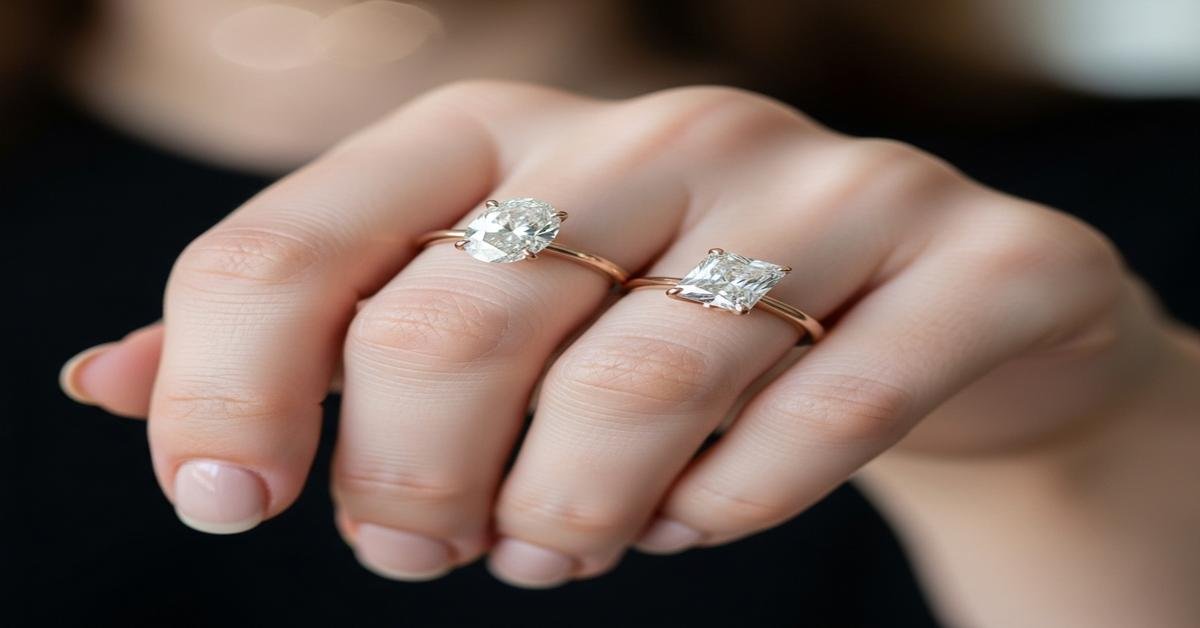
Choosing between an oval and a radiant cut for small hands comes down to how each shape sits on the finger and how much visible “face” it shows. This guide compares the two shapes by measurements, proportions, and settings. It also gives a practical photo checklist so you can judge which will actually look larger on your hand.
How shape affects perceived size — the basics
Perceived size is not just carat weight. It depends on face-up area (the visible top of the stone), the stone’s length-to-width ratio, and the depth percentage. A shallow cut has a larger face-up for the same carat weight. A deep cut hides weight below the girdle and looks smaller from above. That is why two 1.0 ct stones can look quite different on a finger.
Oval: why it usually looks larger on small hands
Ovals are elongated modified brilliant cuts. They typically have a length-to-width (L/W) ratio of 1.30–1.50. A common 1.0 ct oval measures about 8.0 x 6.0 mm. Because of the extra length, an oval covers more of the finger surface, creating the illusion of a larger stone and visually lengthening short fingers.
- Elongation effect: The vertical line of an oval makes fingers look longer. That matters on small hands because it balances proportions.
- Face-up area: For many ovals, the face-up area is larger than a square stone of the same carat. This is why a 1.0 ct oval often reads bigger than a 1.0 ct radiant square.
- Ideal proportions: Aim for depth roughly in the mid-50s to low-60s percent range and a table around 53–63% for good spread and brilliance. (Exact numbers depend on the cutter.)
- Downside: Very long ovals (L/W > 1.5) can look overly narrow on tiny fingers. Pick a proportion that balances length and width.
Radiant: when it reads smaller — and when it doesn’t
Radiant is a hybrid cut with trimmed corners and intense faceting. It can be square-ish (L/W ~1.00–1.10) or rectangular (1.15–1.30). A square radiant around 1.0 ct often measures about 6.5 x 6.5 mm. Because it’s more compact, it usually presents less visible area than an oval of the same weight.
- Compact face-up: Square radiants show less length. On small hands, they won’t visually elongate the finger. That can make them look smaller compared with an oval of the same carat.
- Brilliance and sparkle: Radiants have many facets. They can appear very lively and bright, which draws attention and can offset smaller face-up area.
- Rectangular radiants: If you prefer radiant but want elongation, choose a rectangular radiant with L/W around 1.20. It will behave more like an oval in stretching the finger.
- Depth: Radiants often run deeper (mid- to high-60s percent) because of facet structure. That reduces face-up spread unless the cutter compensates by widening the table.
Measurements and real examples
Concrete comparisons help decide what will look larger:
- 1.0 ct oval — roughly 8.0 x 6.0 mm. Covers more finger length. Good for ring sizes 4–6 to create a balanced, elongated look.
- 1.0 ct radiant (square) — roughly 6.5 x 6.5 mm. Appears more compact and centered. Good if you want a bold center without lengthening the finger.
- 1.25–1.5 ct radiant (rectangular) — about 8.0 x 6.0–6.5 mm. Similar coverage to a 1.0 ct oval; logically, moving up in carat or length makes a radiant read larger.
Why these numbers matter: if you want the largest-looking option for small hands without increasing carat, choose the shape with greater face-up millimeters (usually an oval). If you prefer a more modern, geometric look, choose radiant but adjust carat or proportions.
Setting choices that change perceived size
Settings alter how large a stone appears. Here’s what to use on small hands.
- Halo: Adds 1–2 mm of visual diameter for a single halo. It can make a 1.0 ct radiant look closer to a 1.5 ct face-up. Choose a halo when you want extra presence without bigger carat.
- Prong vs bezel: Four or six prongs maximize visible face-up. A bezel wraps metal around the girdle and reduces visible size by roughly 0.5–1.5 mm. For small hands, prefer prongs to keep the stone looking larger.
- Band width: Thin bands (1.5–2.0 mm) make the center appear larger. Thick bands (3.0+ mm) can make a stone look smaller in relation to the ring.
- Orientation: Ovals set north–south (long axis along the finger) lengthen the finger. East–west settings shorten the visual length and may look more compact on small hands.
Photo guide — what images to compare before buying
When you can’t try stones in person, ask for photos. Use these shots to judge real-world size.
- Top-down on a ring mandrel or ruler: Gives millimeter context. Look for actual dimensions in the caption.
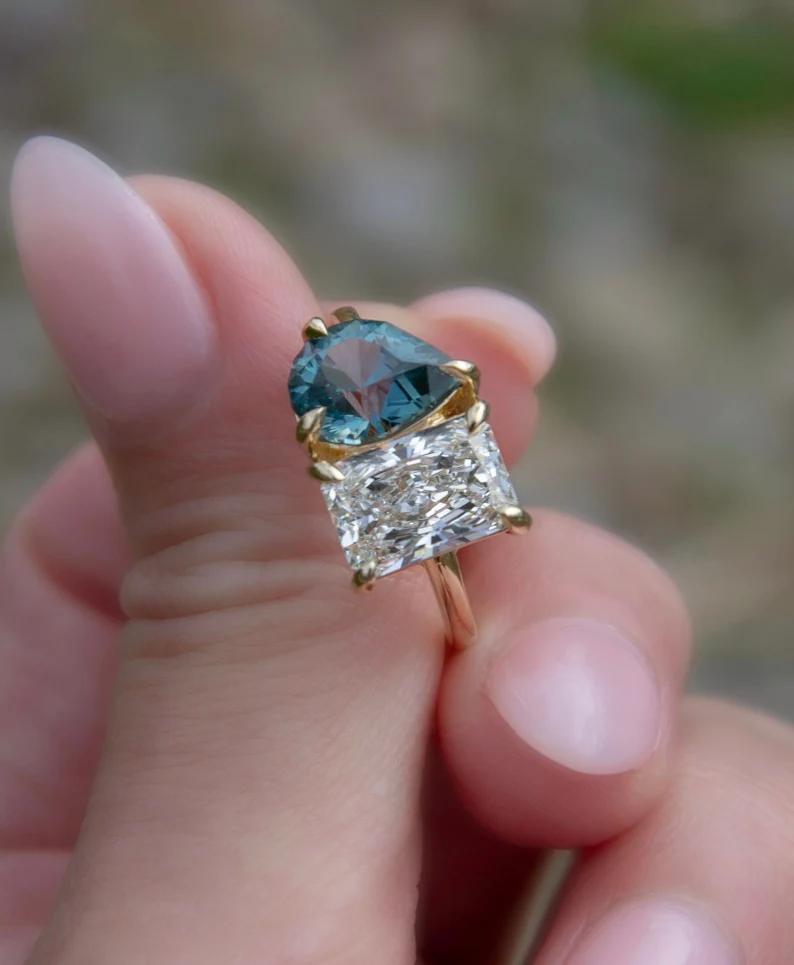
- On a finger of similar size (ring size 4–6): This is the most important view. It shows proportion relative to the finger.
- Top-down with and without halo: Shows difference in face-up area from the same stone.
- 45° angle/profile: Reveals depth and how much of the stone is hidden by the setting.
- Comparison shots: Side-by-side oval and radiant of same carat on the same finger. This visually resolves which looks larger.
- Lighting: Natural daylight and a consistent background. Shadows and dark lighting can shrink perceived size.
Practical buying checklist for small hands
- Prefer oval if you want visual length and larger face-up at the same carat.
- If you like radiant, choose rectangular proportions or add a halo to boost apparent size.
- Ask for exact mm dimensions and depth percent. Avoid stones with deep depths if you want maximum face-up area.
- Choose thin prong settings and a slim band to enlarge the perceived stone size.
- Request photos on a finger size similar to yours (or try both shapes in-store) before committing.
Bottom line: for most small hands, an oval will usually look larger and make fingers appear longer. A radiant can still be the right choice if you prefer a squarer, more faceted look — but plan proportions or settings (rectangular shape, halo, thin band) to match the visual impact of an oval.