Blog
Yellow Gold Heads on White Bands: A UK Colour Hack

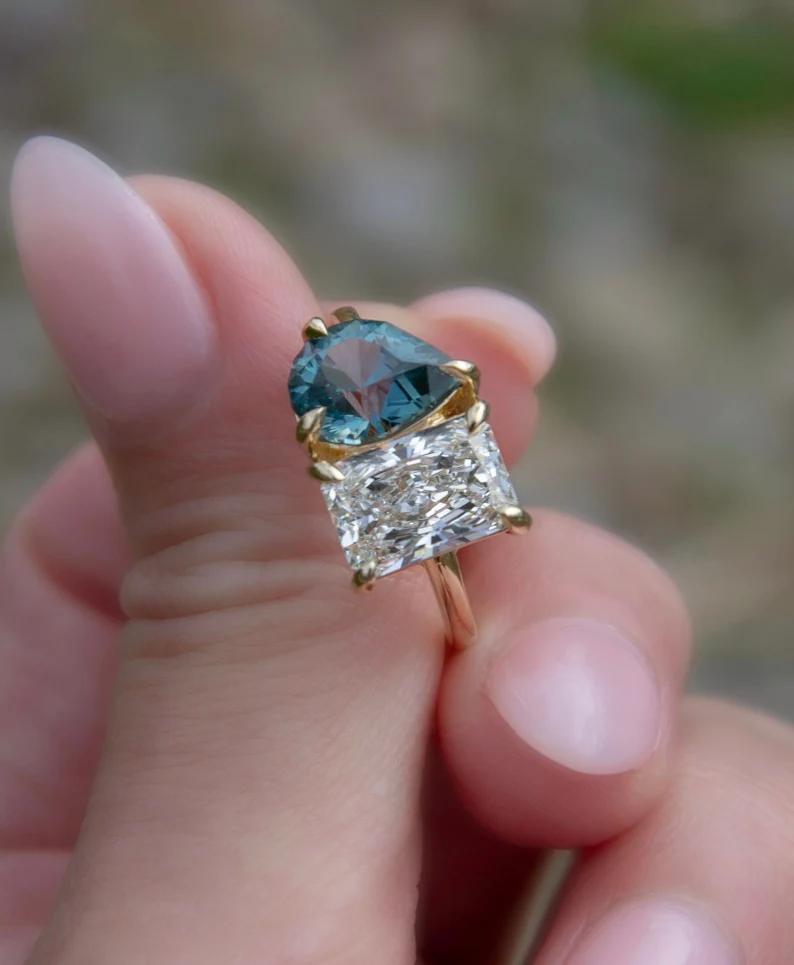
Combining a yellow-gold head with a white metal band is a simple visual trick that gives the best of both worlds: the warm glow around the stone and the modern, bright look of a white shank. In the UK this hybrid look is popular for engagement rings and dress rings. It changes how a gemstone reads, how the metal ages, and how the piece is made. Below I explain why the hack works, the manufacturing choices, alloy and plating details, practical trade-offs, and what to ask a jeweller before you buy.
Why yellow heads on white bands work
Yellow gold near a gemstone adds warmth. That warmth can make a near-colourless diamond (J–K) look less dull, and it enhances warm-toned gemstones such as yellow sapphire, citrine or certain fancy diamonds. A white band keeps the ring looking contemporary and makes the finger appear slimmer because white metal reflects light differently than yellow.
Put simply: the head controls the stone’s immediate colour environment; the band controls the overall silhouette. Using two colours lets each part do its job.
Common carats and alloy notes
In the UK you’ll most often see 9ct and 18ct gold.
- 18ct yellow gold is ~75% gold. The balance is usually copper and silver in varying ratios. That gives a rich colour and good malleability for prongs.
- 9ct yellow gold is ~37.5% gold. It’s harder and cheaper, with stronger reddish tones due to higher copper content.
- White gold is normally an alloy of gold with palladium or nickel plus small amounts of copper and zinc. In modern UK pieces palladium white gold (palladium as the whiteing agent) is preferred for allergy-safe properties. White gold is usually rhodium-plated to boost whiteness.
- Platinum is a popular white band alternative. It’s naturally white, durable, and does not require rhodium plating. It’s heavier and costs more than white gold.
How these rings are made
There are three main methods. Each affects cost, durability and repair options.
- Soldered or laser-welded head — The yellow head is fabricated separately then soldered or laser-welded to a white band. This is the most flexible and common approach. It makes resizing the band easier and limits how much rhodium plating touches the yellow.
- Bi-metal casting — The piece is cast as a single assembly using two metals. This gives a smooth join but is technically more complex and costly. Repairs and resizing can be harder because the metals are fused at cast level.
- Plating — A yellow head can be plated over a base white metal. This is cheapest but least durable. Plating wears off and can produce colour mismatch over time.
Practical details: soldering, plating and allergies
When a yellow head sits on a white gold band, the white band will usually be rhodium-plated. Rhodium is bright and resists tarnish. But if rhodium reaches the yellow parts, it will cover them too. A jeweller should mask or plate selectively so the yellow head stays yellow.
Alloy compatibility matters. If the white metal contains nickel and the wearer is allergic, choose palladium white gold or platinum. Mixing nickel-containing white gold with a yellow alloy can create extra care during soldering and when re-plating.
Resizing and repair considerations
If the head is a separate piece welded on, resizing the band is straightforward. If it’s a bi-metal cast, resizing is more complex and more expensive. Laser welding gives the cleanest joins for future repairs. Ask whether future re-plating will require removing or masking the yellow section. Expect an experienced jeweller to charge extra for multi-metal work — roughly 10–30% more labour compared with a single-metal ring.
Stone settings and measurements
Match head size and prong thickness to the stone. Examples:
- For a 1 ct round diamond (about 6.5 mm diameter), a typical yellow head might have 6 prongs, each 1.2–1.5 mm thick at the tip, and a head diameter 7–8 mm to securely seat the girdle.
- For smaller stones, say 0.25–0.50 ct (3.8–5.0 mm), thinner prongs 0.8–1.1 mm look more delicate and let the yellow show around the stone without overpowering it.
Yellow metal prongs can hide small chips better than white prongs. But they also change how a diamond’s colour appears. If you have a D–F diamond, white prongs keep it looking icy. If you have a J–K diamond, yellow prongs will warm the look in a pleasing way.
Finishes and matching wedding bands
Decide how visible you want the yellow to be from the side and top. A low-set yellow bezel will be obvious from the top. A small yellow head with a white bezel around it will be subtle. If you plan a matching wedding band, think about carrying a small yellow stripe or yellow inner surface on the band to echo the head. That makes the set feel cohesive without making everything yellow.
Care and maintenance
White gold bands typically need rhodium re-plating every 1–3 years depending on wear. Yellow heads do not need rhodium. This means over time the yellow may patina while the white remains bright after re-plating. If you want a consistent look, discuss selective re-plating with your jeweller so the yellow area is protected.
Avoid harsh chemicals. Clean with warm soapy water and a soft brush. Ultrasonic cleaners are fine for diamonds and sapphires but can harm porous stones like opal or emerald. Tell your jeweller which gemstones you have before any repair work.
Questions to ask before you buy
- Is the head a separate piece or cast with the band?
- What carat and alloy are each part made from (e.g., 18ct yellow + 18ct palladium white)?
- Will you mask the yellow if the band is rhodium-plated? Can selective re-plating be done later?
- How will resizing be handled and what are the costs if the ring is bi-metal?
- Is the white metal nickel-free if I have allergies?
Yellow heads on white bands are a practical, stylish choice when done with care. The trick is to be specific about alloys, construction method and future maintenance before you buy. That way you get the look you want and avoid surprises at resizing or re-plating time.